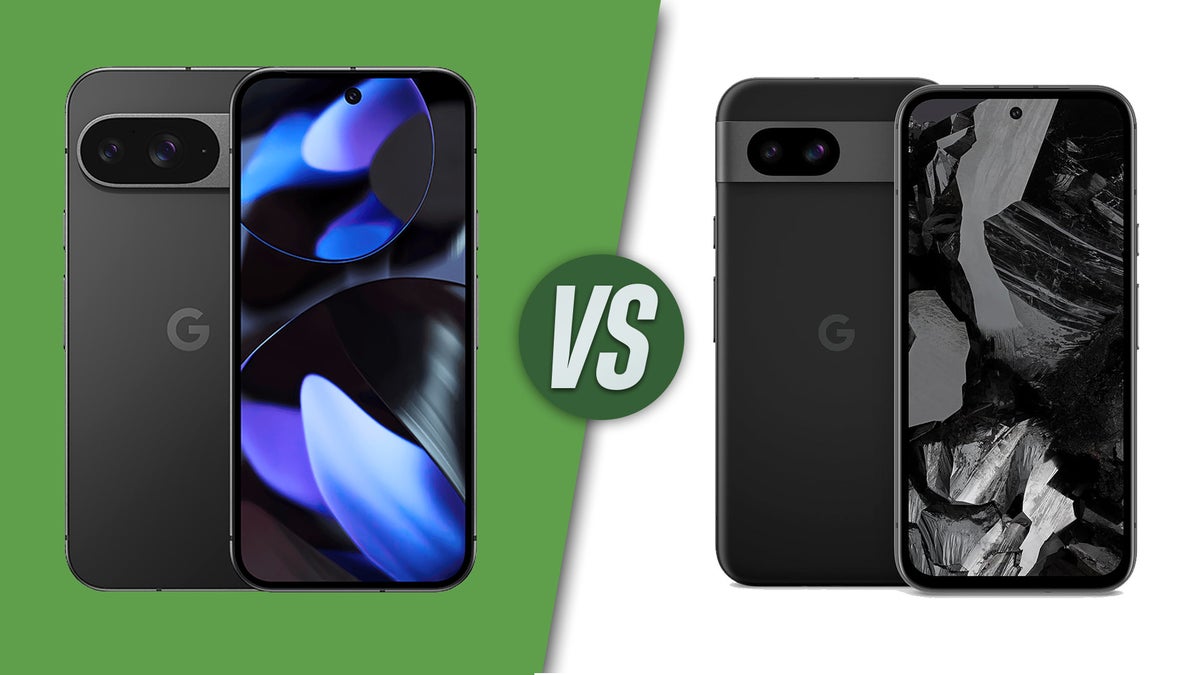
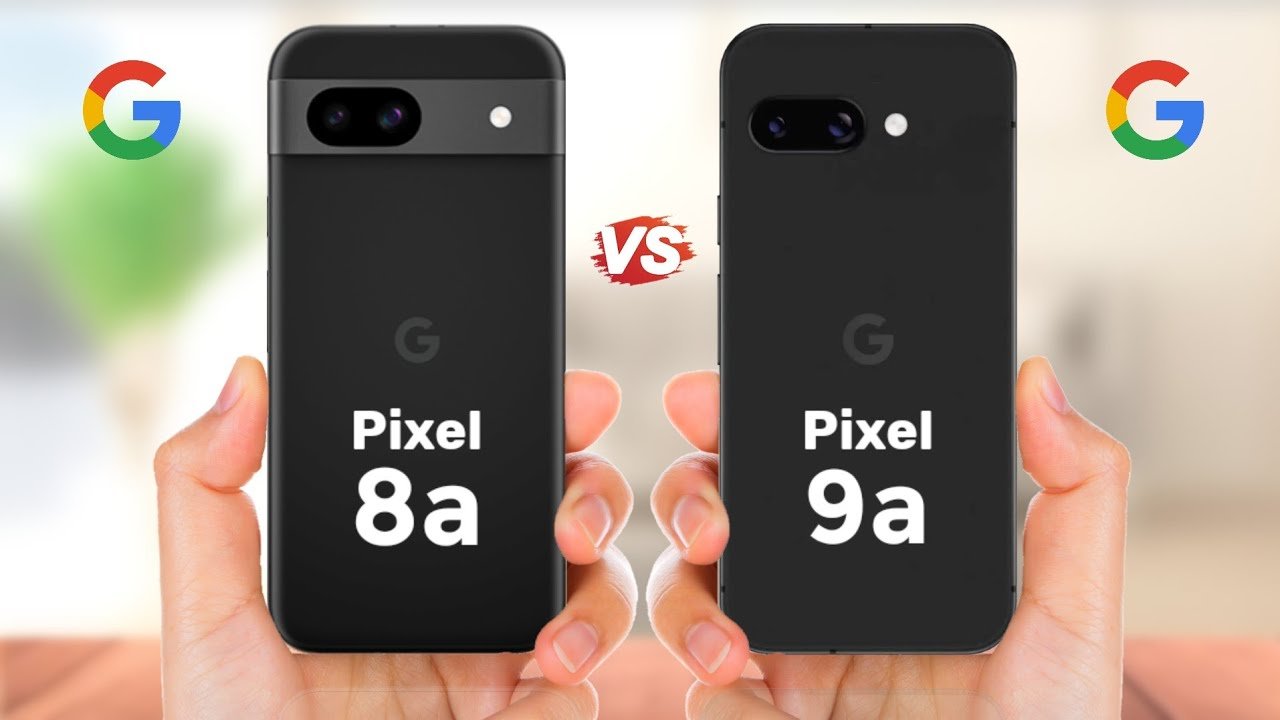
Pixel 9a vs. Pixel 8a: Anticipating the Next Generation vs. The Current Contender
Google’s "a" series Pixel phones have consistently carved out a significant niche in the mid-range smartphone market. Offering a taste of the flagship Pixel experience – particularly in camera performance and software – at a more accessible price point, they represent compelling value. The Pixel 8a, launched in May 2024, continues this tradition with its powerful Tensor G3 chip, impressive camera, and extended software support. However, as the tech world relentlessly marches forward, attention inevitably turns to what comes next: the anticipated Pixel 9a.
This article delves into a comprehensive comparison between the existing Pixel 8a and the highly anticipated, yet still speculative, Pixel 9a. While the Pixel 9a’s specifications are based on leaks, rumors, and Google’s historical release patterns, this analysis aims to provide a detailed outlook on what improvements and changes we can expect, helping potential buyers weigh their options between the current excellent choice and the potential future upgrade.
The Current Contender: Google Pixel 8a
Before we peer into the future, let’s establish a baseline with the Google Pixel 8a. Launched as a direct successor to the Pixel 7a, the 8a brought significant upgrades, most notably the flagship-grade Tensor G3 processor, which powers the Pixel 8 and 8 Pro. This move solidified its position as a performance powerhouse in the mid-range segment, enabling advanced AI features and top-tier computational photography.
The Pixel 8a features a 6.1-inch OLED display with a smooth 120Hz refresh rate, a dual-camera system headlined by a 64MP main sensor, and a robust battery. Google also made a groundbreaking commitment to software longevity, promising seven years of OS, security, and feature updates – a policy previously reserved for its flagship models.
The Anticipation: Understanding the Pixel 9a
It’s crucial to state upfront: the Google Pixel 9a does not officially exist as of this writing. All information regarding its specifications, design, and features is purely speculative, based on industry leaks, Google’s usual release cycle (typically a year after the previous "a" model, around May), and the expected advancements following the Pixel 9 and Pixel 9 Pro flagship series.
However, based on these indicators, we can construct a highly probable profile for the Pixel 9a. It is expected to inherit design cues and, crucially, the latest Tensor chip from its flagship siblings, the Pixel 9 and 9 Pro, which are themselves expected to launch in Fall 2024. This pattern is consistent with Google’s strategy: trickle down the latest flagship processor to the mid-range "a" series.
1. Design and Build Quality: Evolving Aesthetics
Pixel 8a: The Pixel 8a refined the "a" series design, adopting a more rounded, pebble-like aesthetic compared to its squarer predecessors. It features a matte plastic back, which feels good in hand and resists fingerprints better than glass. The iconic camera visor remains, housing its dual lenses. The frame is polished aluminum, and it boasts an IP67 dust and water resistance rating, a premium feature for its price point. At 188g, it feels substantial but not overly heavy.
Pixel 9a (Anticipated): If Google follows its current design trajectory, the Pixel 9a is highly likely to embrace the aesthetic introduced by the Pixel 9 and Pixel 9 Pro. This could mean a more refined camera bar – potentially separated from the side rails, as seen in early Pixel 9 renders – and a return to flatter edges, or at least a less rounded profile than the 8a. The material choices might remain similar, with a durable plastic back for cost-effectiveness, but perhaps with new finishes or color options. The IP67 rating is expected to carry over, maintaining its robust durability. We might see a slight adjustment in dimensions and weight, possibly making it slightly thinner or lighter, or perhaps even a tad larger if Google opts for a slightly bigger display. The overall feel is expected to be more modern and aligned with Google’s evolving design language.
Outlook: The Pixel 9a is poised to offer a more contemporary design, potentially feeling more premium due to updated aesthetics from the flagship line. While the 8a’s design is pleasant, the 9a is expected to be a visual refresh that aligns it more closely with the premium Pixel brand identity.
2. Display Excellence: Brighter, Smoother, More Immersive
Pixel 8a: The Pixel 8a sports a 6.1-inch Actua Display, an OLED panel with a Full HD+ resolution (1080 x 2400 pixels). A significant upgrade from its predecessor was the 120Hz refresh rate, offering noticeably smoother scrolling and animations. It also boasts an impressive peak brightness of 2,000 nits (HDR) and 1,400 nits (SDR), making it very legible even in direct sunlight. The display is protected by Corning Gorilla Glass 3.
Pixel 9a (Anticipated): Given the 8a’s already excellent display, the Pixel 9a will likely build upon this strong foundation. The 6.1-inch size is a sweet spot for many and is likely to remain, though a very slight increase to 6.2 inches isn’t out of the question. The 120Hz refresh rate is almost certainly a given. The key area for improvement will be peak brightness – while 2,000 nits is already excellent, the 9a might push it slightly higher or offer better sustained brightness. More importantly, we might see an upgrade to a newer version of Gorilla Glass (e.g., Victus or even Armor Glass from the Pro models) for enhanced durability. Color accuracy and HDR performance are also expected to see minor refinements, leveraging the improved processing power of the new Tensor chip. Adaptive refresh rate (LTPO technology) is a possibility, allowing the display to dynamically adjust its refresh rate down to 1Hz for static content, which could significantly improve battery efficiency, but this is a more premium feature and might be reserved for the flagship series.
Outlook: The Pixel 8a already has a fantastic display for its price. The Pixel 9a will likely offer incremental improvements in brightness and durability, solidifying its position as one of the best displays in the mid-range.
3. Performance: The Tensor Evolution Continues
Pixel 8a: The biggest selling point of the Pixel 8a is arguably its processor: the Google Tensor G3. This is the same chip found in the Pixel 8 and 8 Pro, a first for the "a" series. The G3 delivers excellent performance for daily tasks, fluid multitasking, and even demanding games. Its real power, however, lies in its dedicated AI and machine learning capabilities, which power features like Call Screen, improved voice typing, and sophisticated on-device photo processing (Magic Eraser, Photo Unblur, Best Take). While it runs warm under sustained heavy load, its overall efficiency and performance for a mid-range phone are outstanding. It comes with 8GB of LPDDR5X RAM, ensuring smooth operation.
Pixel 9a (Anticipated): This is where the Pixel 9a is expected to shine brightest. Following Google’s established pattern, the Pixel 9a is almost certain to feature the Google Tensor G4 chip. The Tensor G4, which will debut in the Pixel 9 and 9 Pro, is expected to bring significant improvements over the G3. These improvements will likely include:
- Enhanced Raw Performance: Faster CPU and GPU cores, leading to snappier app launches, smoother gaming at higher frame rates, and more efficient handling of complex tasks.
- Greater AI Capabilities: The Tensor G4 is expected to further refine Google’s AI prowess. This means even more sophisticated on-device machine learning, potentially enabling new Pixel-exclusive features, faster processing for AI-driven photo and video edits, and deeper integration of Google’s Gemini Nano model for advanced conversational AI and summarization features directly on the device.
- Improved Efficiency and Thermal Management: With each generation, Google aims to make its Tensor chips more power-efficient, leading to better battery life, and to manage heat more effectively, allowing for longer sustained performance without throttling.
- Upgraded Modem: A newer, more efficient modem would mean faster and more reliable 5G connectivity, potentially improving signal strength and data speeds.
- RAM and Storage: The 9a is expected to stick with 8GB of RAM as standard, potentially offering higher storage tiers beyond the 128GB and 256GB options available on the 8a, though 128GB will likely remain the base.
Outlook: The Tensor G4 in the Pixel 9a will represent a noticeable leap in performance and, more importantly, in AI capabilities. While the Tensor G3 in the 8a is still excellent, the 9a will be more future-proof and capable of handling next-generation AI features that Google introduces.
4. Camera Capabilities: Computational Photography Redefined
Pixel 8a: Google Pixels are renowned for their cameras, and the 8a is no exception. It features a dual-camera setup: a 64MP main sensor (with OIS) and a 13MP ultrawide sensor. The front camera is a 13MP shooter. What truly elevates Pixel photography isn’t just the hardware, but Google’s computational photography algorithms, powered by the Tensor G3. Features like Real Tone (for accurate skin tones), Magic Eraser, Photo Unblur, Best Take, and Night Sight are genuinely transformative. Video recording is excellent, supporting 4K at 60fps on both the main and front cameras.
Pixel 9a (Anticipated): This is another area where the Tensor G4’s influence will be profound. While the Pixel 9a might not receive the exact same flagship sensors as the Pixel 9/9 Pro (e.g., no dedicated telephoto lens), it is highly likely to see significant camera improvements:
- Newer Main Sensor: While the 64MP sensor on the 8a is good, the 9a could feature a newer, larger main sensor (perhaps a refined version of the one on the Pixel 8, or a completely new one) that captures more light and detail, especially in challenging conditions. This could lead to even better low-light performance and dynamic range.
- Improved Ultrawide: The 13MP ultrawide could see an upgrade to a wider field of view or a better sensor for sharper images.
- Enhanced Computational Photography: The Tensor G4 will unlock new levels of image processing. This could mean:
- More advanced AI editing: Quicker and more intelligent Magic Eraser, enhanced Photo Unblur, and potentially new generative AI editing features (like those seen on the Pixel 8 Pro with Magic Editor).
- Superior Low Light: Even better Night Sight, capturing more detail and color with less noise.
- Video Enhancements: Features like Video Boost (which uploads video to the cloud for enhanced processing) or Audio Magic Eraser (removing distracting background sounds from videos) could trickle down from the flagship models, offering a significantly improved video experience.
- Faster Processing: The G4 will process images faster, reducing the time it takes to capture and review photos, especially in burst modes or complex scenes.
- Front Camera: The front-facing camera might also see a sensor upgrade or improvements in its computational selfie features, including better portrait mode effects and low-light performance.
Outlook: The Pixel 9a’s camera system, powered by the Tensor G4, is expected to be a substantial upgrade, not just in raw sensor capability but more critically in the sophistication and speed of Google’s industry-leading computational photography. It will likely set a new benchmark for mid-range smartphone cameras.
5. Battery Life and Charging: Endurance Meets Efficiency
Pixel 8a: The Pixel 8a houses a 4,492 mAh battery, which generally provides good all-day usage for most users. It supports 18W wired charging, which is somewhat slow by modern standards, taking over an hour and a half for a full charge. It also includes 7.5W wireless charging, a welcome addition for convenience.
Pixel 9a (Anticipated): Battery capacity is an area where Google often makes minor tweaks in the "a" series. The Pixel 9a could feature a slightly larger battery (e.g., 4,500-4,700 mAh) or maintain a similar size while benefiting from the Tensor G4’s improved power efficiency. This efficiency, combined with potential LTPO display technology (if included), could lead to noticeably better real-world battery life.
Charging speed is a prime candidate for an upgrade. The 18W wired charging on the 8a feels dated. The Pixel 9a is strongly expected to feature faster wired charging, potentially around 27W or even 30W, significantly reducing charging times. Wireless charging might also see a bump, perhaps to 12W or 15W, aligning it more closely with the standard Qi wireless charging speeds.
Outlook: The Pixel 9a is poised to offer not only potentially longer battery life due to a more efficient chip and possibly a larger battery, but also a much-needed upgrade in wired charging speed, making it more convenient for everyday use.
6. Software Experience and Longevity: The Pure Android Promise
Pixel 8a: One of the most compelling reasons to choose a Pixel is the software experience. The Pixel 8a runs pure Android 14 out of the box, free from bloatware, and delivers a clean, intuitive user interface. It benefits from exclusive Pixel features like Call Screen, Hold for Me, At a Glance widget, Now Playing, and the recently introduced Circle to Search. Crucially, the Pixel 8a comes with an industry-leading commitment of seven years of OS, security, and feature updates. This means it will receive Android 21 and security patches until 2031, providing unparalleled longevity for a mid-range device.
Pixel 9a (Anticipated): The Pixel 9a will undoubtedly launch with the latest version of Android (likely Android 15, depending on its release timing relative to the flagship Pixel 9 series). It will continue the tradition of offering a pure, unadulterated Android experience with all the latest Pixel-exclusive features. The seven-year update commitment is almost certainly going to carry over to the Pixel 9a, making it an incredibly future-proof investment. The Tensor G4’s advanced AI capabilities will likely enable even more sophisticated on-device AI features and deeper integration with Google’s Gemini models, enhancing user interactions, productivity, and accessibility. Expect new camera modes, smarter contextual information, and perhaps more personalized AI assistance directly on the device.
Outlook: Both phones offer an exceptional software experience and unmatched longevity in the Android world. The Pixel 9a will simply start on a newer version of Android and be equipped with a more powerful NPU (Neural Processing Unit) to handle the very latest AI features Google introduces over its extended lifespan.
7. Price, Value, and Availability
Pixel 8a: The Pixel 8a launched with a starting price of $499 for the 128GB model. This price point, combined with its flagship processor, excellent camera, and seven years of updates, makes it an incredibly strong value proposition. It is widely available across major carriers and retailers globally.
Pixel 9a (Anticipated): Google has generally tried to maintain the "a" series price point. However, with inflation and potential component upgrades (especially the Tensor G4 and possibly a better camera sensor), a slight price increase for the Pixel 9a is plausible, perhaps starting at $549. Alternatively, Google might absorb some costs to keep it at $499, making it even more competitive.
Availability will likely follow the same pattern as previous "a" series phones, with a launch around May 2025 (assuming a 2024 Pixel 9 launch), followed by widespread availability across markets where Pixels are sold.
Outlook: The Pixel 8a offers exceptional value right now. The Pixel 9a will likely command a slightly higher price but will justify it with improved performance, potentially better camera hardware, and future-proof AI capabilities.
Who Should Buy Which?
Choose the Pixel 8a if:
- You need a new phone right now: The 8a is available today and offers an outstanding experience.
- You’re on a tighter budget: It represents incredible value at its current price point, especially considering the long-term software support.
- You value proven performance: The Tensor G3 is a known quantity, delivering smooth performance and excellent AI features.
- You prioritize immediate availability: No waiting, no speculation, just a great phone ready to go.
Wait for the Pixel 9a if:
- You want the absolute latest technology: The Tensor G4 will be a significant step up in raw power and AI capabilities, offering a more future-proof experience.
- You demand cutting-edge camera performance: Expect the 9a to push the boundaries of mid-range computational photography even further.
- You’re willing to pay a potential premium: While likely still affordable, it might be slightly more expensive than the 8a’s launch price.
- You can wait until mid-2025 (estimated): If you’re not in a hurry, waiting will get you the latest and greatest from Google’s "a" series.
- You want the best possible long-term performance: While both have 7 years of updates, the 9a will simply start from a higher performance baseline.
Conclusion: A Glimpse into Google’s Mid-Range Future
The Google Pixel 8a is, without a doubt, one of the best mid-range smartphones available today. Its combination of flagship-grade performance, a superb camera, a vibrant display, and an industry-leading software update policy makes it an incredibly compelling package for its price.
However, the anticipated Pixel 9a promises to elevate the "a" series even further. By incorporating the next-generation Tensor G4 chip, it is poised to deliver a significant leap in raw performance and, more importantly, in the sophistication of on-device AI. This will likely translate into even more powerful computational photography, new intelligent features, and a smoother, more responsive user experience that is genuinely future-proof. While the design and display improvements might be incremental, the internal upgrades are expected to be substantial.
Ultimately, the choice between the Pixel 8a and the speculative Pixel 9a boils down to your immediate needs and your appetite for the bleeding edge of Google’s mid-range technology. The Pixel 8a is an excellent, proven device that offers tremendous value right now. The Pixel 9a, on the other hand, represents the next evolution of Google’s vision for accessible AI-powered smartphones, promising a more refined and capable experience for those willing to wait. Regardless of your choice, both devices embody Google’s commitment to delivering a pure Android experience with exceptional cameras and unparalleled software longevity.