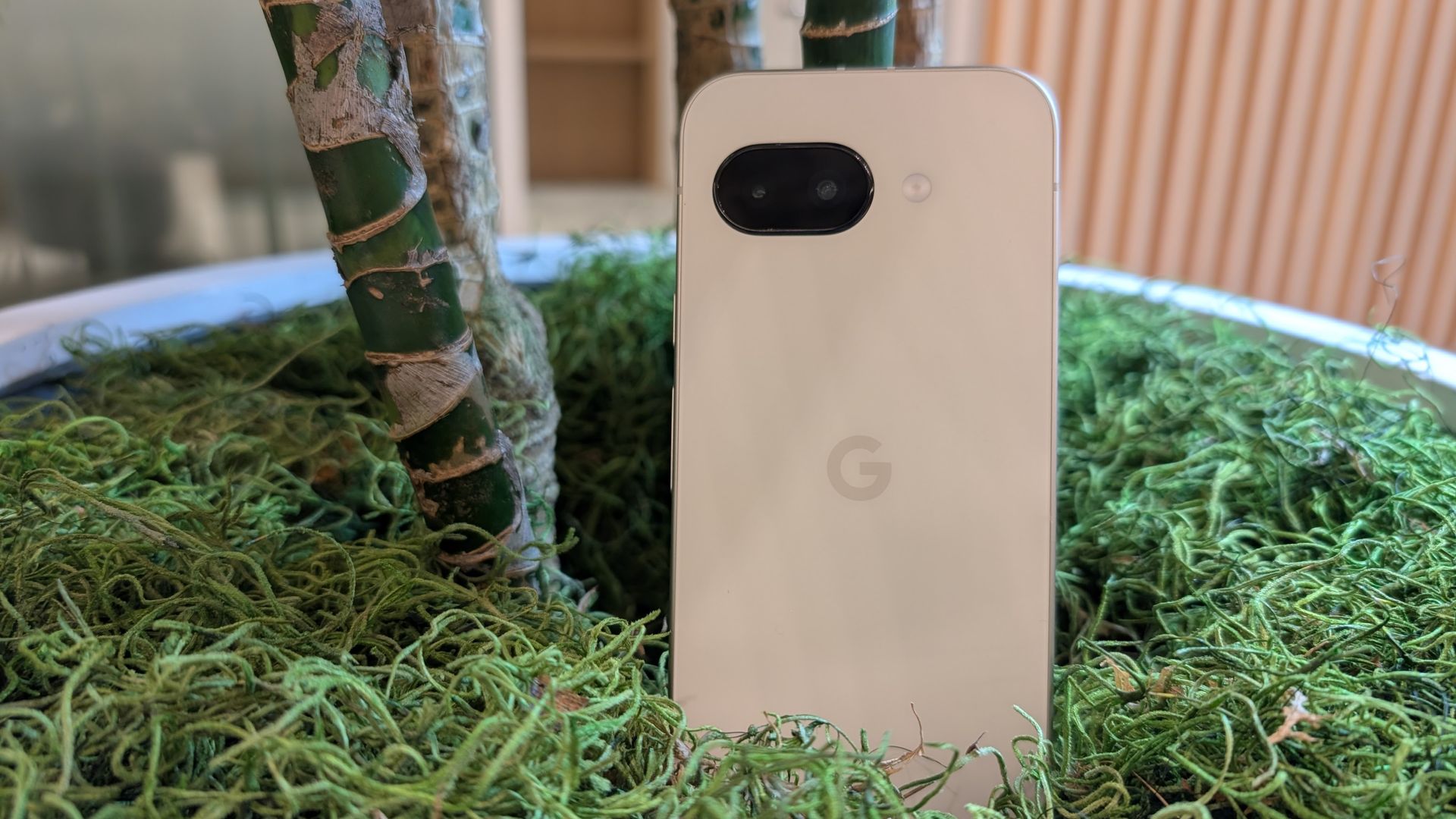
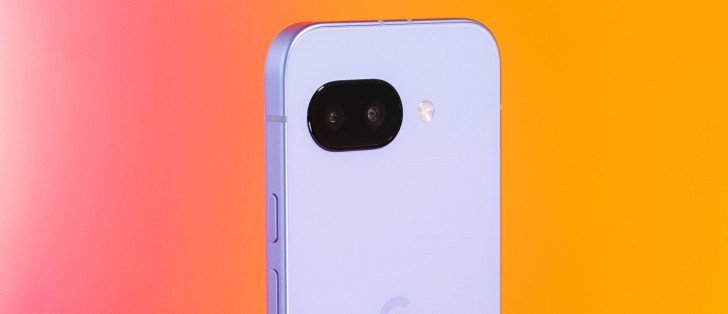
The Enduring Quest for Power: A Deep Dive into Google Pixel 9a Battery Life and Charging Speed
In the rapidly evolving landscape of smartphones, where dazzling displays, advanced camera systems, and powerful processors constantly push the boundaries of innovation, one fundamental aspect remains paramount: battery life and charging speed. For many users, these two features are not just conveniences but necessities, dictating the practical usability of their device throughout the day. As anticipation builds for the rumored Google Pixel 9a, the successor to the highly popular Pixel 8a, a significant portion of the conversation will inevitably revolve around its power capabilities. Will it finally break the mold of previous A-series models, offering truly all-day battery life and competitive charging speeds? Or will Google continue its philosophy of optimization over raw specifications?
This comprehensive article will delve into the expected battery performance and charging prowess of the Google Pixel 9a, dissecting the various factors that influence these critical aspects, comparing it to its predecessors and competitors, and exploring the intricate balance Google aims to strike between hardware, software, and user experience.
I. The Pixel A-Series Legacy: A Foundation of Expectations
Before speculating on the Pixel 9a, it’s crucial to understand the historical context of the Pixel A-series. Designed to bring Google’s acclaimed software experience and computational photography to a more accessible price point, the A-series has consistently offered compelling value. However, battery life and charging speeds have often been areas of mixed reception.
The Pixel 7a, for instance, featured a 4,385 mAh battery and introduced wireless charging to the A-series, albeit at a modest 7.5W. Wired charging remained at 18W. While the battery capacity was a slight improvement over its predecessors, real-world usage often saw users reaching for their chargers by late afternoon, especially with moderate to heavy use. The Tensor G2 chip, while powerful, was not always the most power-efficient, sometimes leading to quicker drain.
The Pixel 8a, the most recent iteration, brought a slightly larger 4,492 mAh battery and a bump in wired charging speed to 27W, while wireless charging remained at 7.5W. The Tensor G3 chip, despite its increased performance, also aimed for better efficiency. Early reviews suggested a marginal improvement in battery longevity, but it still fell short of the "two-day" claims some competitors made. The 27W charging, while an upgrade, remained far behind the ultra-fast charging solutions offered by many Android rivals in the mid-range segment.
These predecessors set a clear expectation for the Pixel 9a: users are looking for significant, tangible improvements. The market has moved forward, and what was acceptable a year or two ago might no longer cut it.
II. Battery Life: The Heart of the Matter for the Pixel 9a
The battery life of any smartphone is a complex interplay of several factors, extending far beyond just the raw mAh capacity. For the Pixel 9a, we anticipate Google will continue to refine its approach, leveraging both hardware advancements and software wizardry.
A. Expected Battery Capacity (mAh): The Raw Number
Based on the incremental increases seen in previous A-series models, it is reasonable to expect the Pixel 9a to feature a battery capacity in the range of 4,500 mAh to 4,800 mAh. Pushing beyond 5,000 mAh might make the device thicker or heavier, potentially compromising the ergonomic design that Google often prioritizes for its A-series. An increase within this range, combined with other optimizations, would be a welcome improvement, potentially pushing the device closer to a full day of heavy use or a day and a half of moderate use.
B. The Role of the Tensor Chip: Efficiency at the Core
The Pixel 9a will undoubtedly be powered by the next-generation Google Tensor chip, likely the Tensor G4 or even the Tensor G5. Each iteration of the Tensor chip has brought performance enhancements, but efficiency has also been a key focus. The Tensor G3 in the Pixel 8a showed improvements over the G2, particularly in sustained performance and thermal management. For the Pixel 9a’s Tensor chip, we expect:
- Improved Manufacturing Process: Moving to a more advanced fabrication process (e.g., 4nm or even 3nm) would inherently lead to greater power efficiency. Smaller transistors consume less power and generate less heat, directly translating to better battery life.
- Optimized Core Configuration: Google’s custom CPU and GPU clusters are designed for specific tasks. Further optimization of these clusters, ensuring the right cores are activated for the right workload, can minimize unnecessary power draw.
- Enhanced AI/ML Accelerators: The Tensor chip’s strength lies in its dedicated AI and machine learning capabilities. These are crucial for Google’s software optimizations, including battery management. A more efficient NPU (Neural Processing Unit) means that AI-driven features like Adaptive Battery can operate with even less power overhead.
While raw power is often highlighted, the true test of a smartphone chip’s success in daily use is its efficiency. A more efficient Tensor chip is perhaps the single most important hardware factor for the Pixel 9a’s battery life.
C. Software Optimization: Google’s Secret Weapon
Google’s Pixels are renowned for their "software-first" approach, and battery management is no exception. The Pixel 9a will run the latest version of Android (likely Android 15), further refined with Pixel-exclusive features.
- Adaptive Battery: This long-standing Pixel feature learns your usage patterns over time, intelligently prioritizing power for apps you use most frequently and restricting background activity for less-used ones. With a more powerful and efficient Tensor chip, Adaptive Battery on the Pixel 9a could become even more precise and effective, offering truly personalized power management.
- Doze Mode and App Standby: These core Android features put the device into a low-power state when it’s stationary and unused (Doze Mode) and restrict network access and background processes for apps you haven’t used recently (App Standby). Google continuously refines these features with each Android iteration, and the Pixel 9a will benefit from the latest advancements.
- Pixel-Specific Optimizations: Google frequently introduces subtle, behind-the-scenes optimizations specific to Pixel hardware. These can include fine-tuning system processes, optimizing animations for lower power consumption, and better integration between the Tensor chip and the display driver. These seemingly small tweaks can cumulatively add up to significant battery savings.
- Display Refresh Rate Management: If the Pixel 9a retains a high refresh rate display (e.g., 90Hz or even 120Hz, though 90Hz is more likely for the A-series), Google’s software will be crucial in dynamically adjusting the refresh rate based on content. Dropping to 60Hz for static images or text can save considerable power without impacting the user experience.
D. Display Impact: A Major Power Consumer
The display is often the most power-hungry component of a smartphone. The Pixel 9a is expected to feature an OLED panel, known for its deep blacks and excellent contrast. While OLEDs are generally more power-efficient than LCDs (because they can turn off individual pixels for black areas), other factors come into play:
- Brightness: The brighter the screen, the more power it consumes. Google’s excellent auto-brightness algorithms and improved outdoor visibility (higher peak brightness) can sometimes lead to increased power draw, but a more efficient panel could mitigate this.
- Refresh Rate: As mentioned, a 90Hz or 120Hz display, while offering a smoother scrolling experience, consumes more power than a standard 60Hz panel. The Pixel 9a will need intelligent adaptive refresh rate technology to balance smoothness with efficiency.
- Resolution: The A-series has historically stuck to FHD+ resolutions. Maintaining this resolution rather than jumping to QHD+ helps conserve battery life without a noticeable dip in visual quality on a screen of this size.
E. Real-World Usage Scenarios
Ultimately, battery life is measured by how the phone performs in real-world scenarios. For the Pixel 9a, we expect:
- Moderate Usage: Social media browsing, email, messaging, occasional photos, and light web browsing should comfortably last a full day (16-18 hours).
- Heavy Usage: Gaming, prolonged video streaming, extensive navigation, video calls, and frequent camera use will naturally drain the battery faster. The goal for the Pixel 9a should be to endure at least 8-10 hours of screen-on time under such conditions.
- 5G vs. Wi-Fi: 5G connectivity is more power-intensive than Wi-Fi or LTE. Users in areas with strong 5G signals who frequently use cellular data may experience faster drain. Google’s software should intelligently manage modem power states.
III. Charging Speed: The Quick Recovery for the Pixel 9a
While battery longevity is crucial, the ability to quickly replenish power when needed is equally important. The Pixel A-series has lagged behind many competitors in charging speed, a point of contention for many users. The Pixel 8a’s 27W wired charging was an improvement but still modest.
A. Wired Charging Wattage: Catching Up to the Competition
For the Pixel 9a, we expect Google to push the wired charging speed further. A jump to 30W or even 45W would be a significant and welcome upgrade.
- 30W Charging: This would allow for a 0-50% charge in approximately 30 minutes, and a full charge in around 75-90 minutes. This is a common sweet spot for many mid-range and even some flagship devices.
- 45W Charging: If Google were to be aggressive, 45W could see 0-50% in under 20-25 minutes, and a full charge in under an hour. This would put the Pixel 9a in a much more competitive position against rivals like Samsung’s A-series or various offerings from Xiaomi, OnePlus, and Nothing.
Google’s choice will likely depend on a balance of cost, thermal management, and battery health considerations. Rapid charging generates more heat, which can accelerate battery degradation over time.
B. Wireless Charging (Qi): Convenience Over Speed
The Pixel A-series introduced wireless charging with the 7a, a feature often reserved for more premium devices. The 7.5W wireless charging on the 7a and 8a is convenient for overnight charging or topping up on a desk but isn’t designed for rapid power delivery.
For the Pixel 9a, we anticipate wireless charging to remain a standard feature, likely at 7.5W or perhaps a slight bump to 10W-15W. Google generally prioritizes battery health and longevity with its charging solutions, and higher wireless charging speeds often come with significant heat generation and require proprietary chargers, which goes against the Qi standard’s universality. The primary purpose of wireless charging on the A-series is convenience, not speed.
C. Adaptive Charging: Protecting Battery Health
Google’s Adaptive Charging feature is a testament to its focus on battery longevity. This intelligent system learns your charging habits (e.g., overnight charging) and holds the charge at 80% until closer to your wake-up time, then slowly tops it off to 100%. This reduces the time the battery spends at peak charge, minimizing stress and extending its overall lifespan. The Pixel 9a will undoubtedly feature an enhanced version of Adaptive Charging, working seamlessly with its potentially faster wired charging speeds.
D. The Charging Experience: Practical Considerations
- Charger in the Box: Following industry trends, it is highly unlikely the Pixel 9a will include a power adapter in the box. Users will need to purchase a compatible USB-PD (Power Delivery) charger, ideally one that supports the phone’s maximum charging wattage.
- Cable Quality: Using a high-quality USB-C to USB-C cable that can handle higher wattages is crucial for optimal charging speeds.
- Heat Management: Efficient heat dissipation during charging is vital. The Tensor chip’s thermal management capabilities will play a role here, ensuring the phone doesn’t overheat during fast charging sessions, which could throttle speeds and potentially damage the battery.
IV. Competitive Landscape and User Expectations
The mid-range smartphone market is fiercely competitive. The Pixel 9a doesn’t exist in a vacuum; it competes with devices from Samsung (Galaxy A-series), Nothing (Phone series), OnePlus (Nord series), and various Chinese manufacturers, many of whom offer larger batteries and significantly faster charging speeds (e.g., 67W, 80W, or even 120W).
Users in this segment often prioritize tangible benefits like battery life and charging speed alongside camera performance and software experience. While Google’s clean Android experience and computational photography are strong selling points, a consistently mediocre battery or slow charging can be deal-breakers for some.
The Pixel 9a needs to strike a balance. It doesn’t necessarily need to offer 120W charging to be competitive, but it does need to offer a noticeably improved experience over its predecessors. A battery that comfortably lasts a full day for most users, coupled with charging speeds that allow for a significant top-up in 15-20 minutes, would address many of the concerns raised about previous A-series models.
V. The Future of Pixel Battery Technology
Looking beyond the Pixel 9a, Google, like other tech giants, is undoubtedly investing in future battery technologies. Research into solid-state batteries, silicon-anode batteries, and other advanced chemistries promises higher energy density (more power in the same size) and faster charging without compromising longevity. While these are likely years away from mass market adoption in mid-range devices, Google’s long-term vision for its Tensor platform and its ecosystem will undoubtedly include advancements in power management.
Furthermore, the integration of AI could lead to even more predictive and proactive battery management. Imagine a phone that not only learns your usage patterns but also anticipates your needs based on your calendar, location, and even weather, intelligently adjusting power consumption to ensure you never run out of juice when you need it most.
VI. Conclusion: A Critical Balance for the Pixel 9a’s Success
The Google Pixel 9a stands at a crucial juncture for the A-series. While its camera prowess and clean Android experience are almost guaranteed to be excellent, its success in the competitive mid-range market will heavily hinge on its battery life and charging speed.
A larger battery capacity, combined with a more power-efficient Tensor G4/G5 chip and Google’s continued software optimizations (Adaptive Battery, intelligent refresh rate management), should collectively deliver a noticeable improvement in battery longevity. The goal for the Pixel 9a should be to offer consistent all-day battery life for the average user, pushing towards 7-8 hours of screen-on time.
Equally important is charging speed. A jump to 30W or even 45W wired charging would transform the user experience, allowing for quick top-ups and significantly reducing downtime. While wireless charging will likely remain a convenience feature, the wired charging speed is where Google needs to demonstrate a commitment to meeting modern user expectations.
Ultimately, the Pixel 9a’s battery life and charging speed will be a critical reflection of Google’s ability to balance its software-first philosophy with the tangible hardware improvements that users demand. If Google can deliver a device that not only captures stunning photos and offers a smooth software experience but also reliably keeps pace with users’ demanding schedules, the Pixel 9a will undoubtedly be a compelling option in the mid-range segment, solidifying its position as a go-to choice for those seeking premium experiences without the premium price tag. The quest for power continues, and for the Pixel 9a, a significant step forward in this arena is not just desired, but essential.