
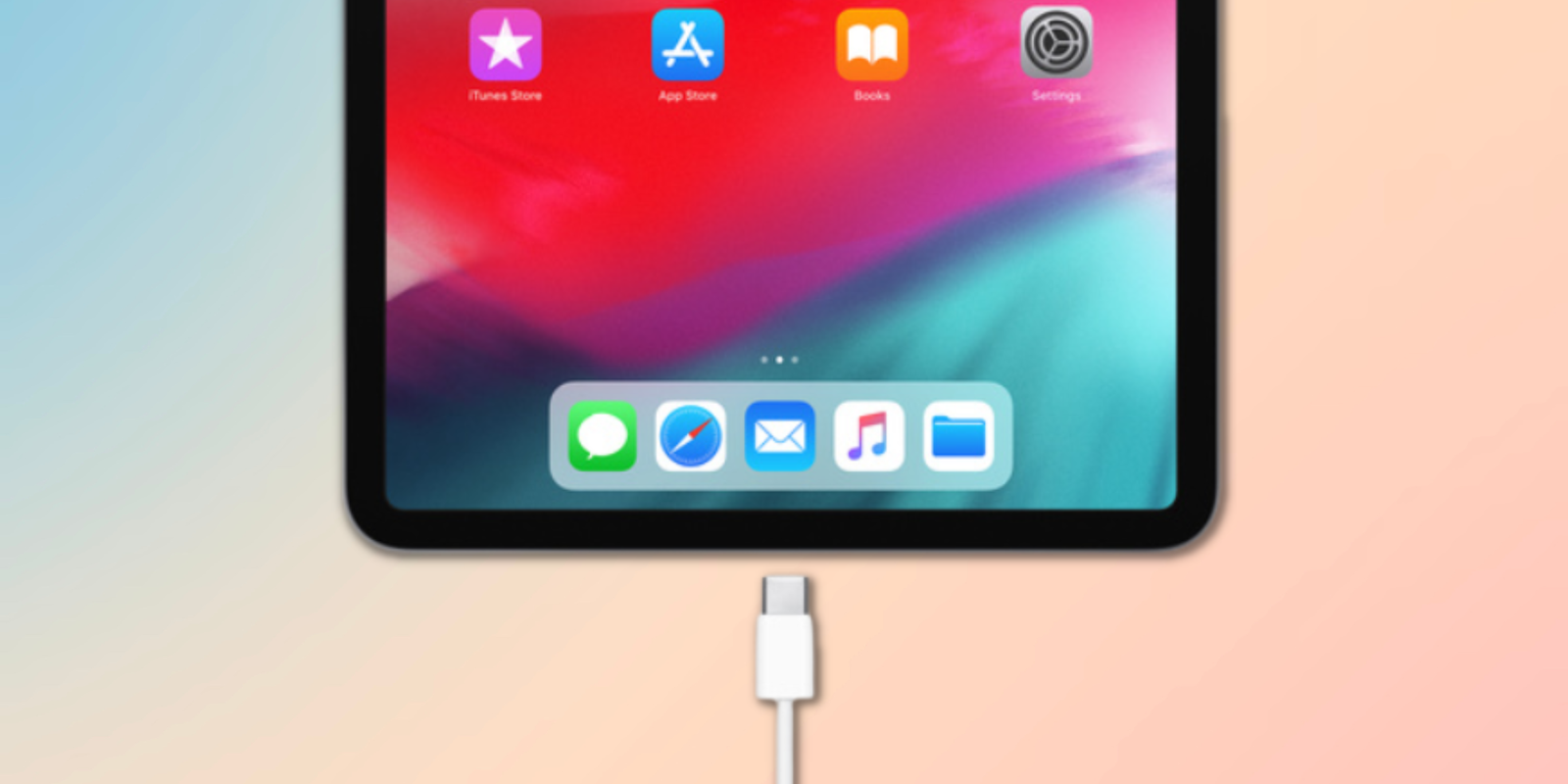
Absolutely! Here’s a 2000-word article detailing the features and significance of the USB-C port on the iPad Air 4.
The Gateway to Versatility: Unpacking the iPad Air 4’s USB-C Port Features
The iPad Air 4, released in late 2020, marked a pivotal moment in Apple’s tablet evolution, not just for its stunning all-screen design and powerful A14 Bionic chip, but primarily for one seemingly minor yet profoundly impactful change: the adoption of a USB-C port. This shift from Apple’s proprietary Lightning connector was more than just a convenience; it was a strategic move that fundamentally reshaped the iPad Air’s capabilities, democratizing features previously exclusive to the Pro lineup and ushering in a new era of versatility for the mainstream iPad user.
This article will delve deep into the multifaceted features and implications of the iPad Air 4’s USB-C port, exploring how it transforms the device from a mere consumption tablet into a powerful, adaptable workstation capable of handling a diverse array of professional and personal tasks.
A Paradigm Shift: From Lightning to USB-C
For years, Apple’s Lightning connector, while compact and reversible, remained a proprietary bottleneck for the iPad’s potential. It limited data transfer speeds, restricted accessory compatibility, and necessitated Apple-specific cables and adapters. The transition to USB-C on the iPad Air 4 was a clear signal that Apple was embracing industry standards, opening up its tablet ecosystem to a world of universal connectivity.
USB-C, short for Universal Serial Bus Type-C, is an industry-standard connector that offers a multitude of advantages over its predecessors, including Lightning:
- Reversibility: Like Lightning, USB-C is reversible, meaning there’s no "wrong way" to plug it in.
- Higher Bandwidth: It supports significantly faster data transfer speeds. The iPad Air 4’s USB-C port adheres to the USB 3.1 Gen 2 standard, capable of theoretical speeds up to 10 Gigabits per second (Gbps). This is a massive leap from Lightning’s USB 2.0 speeds (480 Mbps).
- Power Delivery (PD): USB-C can handle much higher power throughput, allowing for faster charging of the iPad itself and the ability to power or even charge external accessories.
- Alternate Modes: This is where USB-C truly shines. It supports various "alternate modes" that allow the port to carry different types of data, such as DisplayPort for video output, or even Thunderbolt in higher-end implementations (though not on the Air 4).
- Universal Compatibility: This is perhaps its most significant advantage. USB-C is rapidly becoming the universal standard for laptops, smartphones, monitors, and peripherals across different brands. This means fewer dongles, more interoperability, and a significantly expanded ecosystem of compatible accessories.
By adopting USB-C, the iPad Air 4 was no longer a "walled garden" device in terms of connectivity. It became a more open, adaptable tool, ready to integrate seamlessly into a user’s existing tech ecosystem.
Core Capabilities Unlocked by USB-C
The USB-C port on the iPad Air 4 isn’t just a charging port; it’s a multi-functional gateway that enables a suite of powerful capabilities:
1. Power Delivery (PD)
- Faster Charging: The iPad Air 4 supports faster charging via USB-C Power Delivery. While it ships with a 20W charger, the device can draw slightly more power for quicker top-ups, especially from higher wattage USB-C power adapters (like those for MacBooks).
- Reverse Charging: The iPad Air 4 can act as a power bank for other devices. You can connect an iPhone, Apple Watch, or even AirPods (with a USB-C to Lightning or USB-C to USB-C cable/adapter) to the iPad Air 4, and it will charge them. This is incredibly convenient for on-the-go power needs.
- Powering Peripherals: Many bus-powered USB-C accessories (like external SSDs, hubs, or audio interfaces) can draw power directly from the iPad Air 4’s port, simplifying setups and reducing cable clutter. However, it’s important to note that drawing too much power can drain the iPad’s battery quickly.
2. High-Speed Data Transfer (USB 3.1 Gen 2)
This is arguably the most transformative feature for productivity. The 10 Gbps (1.25 GB/s) theoretical bandwidth of USB 3.1 Gen 2 enables:
- External Storage Connectivity: Users can directly connect external hard drives, SSDs, and USB flash drives to the iPad Air 4. This is a game-changer for managing large files, such as 4K video footage, high-resolution photos, or extensive document libraries. The Files app in iPadOS provides a seamless interface for browsing, opening, and transferring files to and from these external drives, making the iPad Air a much more viable option for creative professionals and power users.
- Faster Data Sync: Transferring large photo libraries from a camera, importing video clips, or syncing substantial document folders from other devices becomes significantly quicker and more efficient.
- Connecting High-Bandwidth Peripherals: Devices like high-resolution webcams (though iPadOS support for these is still evolving beyond basic FaceTime), professional audio interfaces, and even some specialized input devices can leverage this higher bandwidth for optimal performance.
3. Video Output to External Displays
The USB-C port allows the iPad Air 4 to connect to external monitors, TVs, and projectors, significantly expanding its utility for presentations, media consumption, and even creative workflows.
- Mirroring: The most common use case is mirroring the iPad’s display to a larger screen. This is perfect for presentations, sharing content with a group, or simply enjoying movies on a bigger display. The Air 4 supports up to 4K resolution at 60Hz.
- Extended Display (Limited): While the iPad Air 4 (and iPadOS at the time of its release) didn’t support a true "extended desktop" experience like a Mac, some applications were designed to take advantage of a second screen. For instance, a video editing app might show the timeline on the iPad and a full-screen preview on the external monitor, or a drawing app might show controls on the iPad and the canvas on the monitor. This was a precursor to the more robust Stage Manager feature introduced in later iPadOS versions for select M-series iPads.
- Docking Stations/Hubs with Display Outputs: Users can connect USB-C hubs that include HDMI or DisplayPort outputs, allowing them to connect to virtually any modern display.
4. Extensive Peripheral Connectivity
This is where the "universal" aspect of USB-C truly shines, transforming the iPad Air 4 into a more desktop-like device:
- Keyboards and Mice/Trackpads: While Apple’s Magic Keyboard for iPad is a premium option, the USB-C port allows for direct wired connection of standard USB keyboards and mice (via a USB-C hub or adapter). This offers a reliable, latency-free input experience for extended typing sessions or precise cursor control, augmenting iPadOS’s robust trackpad and mouse support.
- Audio Interfaces: Musicians, podcasters, and streamers can connect professional USB audio interfaces, microphones, and even MIDI controllers directly to the iPad Air 4. This enables high-quality audio recording, multi-track recording, and real-time audio processing within apps like GarageBand, Logic Pro for iPad, or various third-party DAWs.
- Cameras: Photographers can connect their digital cameras (DSLRs, mirrorless, action cameras) directly to the iPad Air 4 to import photos and videos quickly. The Files app recognizes the camera as an external storage device, streamlining the workflow for on-location editing and sharing.
- Ethernet Adapters: For situations requiring a stable, fast wired internet connection, a USB-C to Ethernet adapter can be connected, making the iPad Air 4 a reliable tool for critical online tasks.
- Card Readers: Directly import photos and videos from SD or microSD cards using a compatible USB-C card reader, essential for photographers and videographers.
- USB Hubs and Docks: This is perhaps the most powerful accessory category. A single USB-C hub can transform the iPad Air 4’s lone port into multiple USB-A ports, an HDMI output, an Ethernet port, and SD card slots, essentially turning the iPad into a portable workstation with extensive connectivity options.
Unlocking Potential: Use Cases and Workflows
The USB-C port elevates the iPad Air 4 from a consumption device to a creation and productivity powerhouse across various domains:
- For Creative Professionals:
- Video Editing: Connect an external SSD to store and edit 4K footage directly in apps like LumaFusion, then export to the SSD. Use an external monitor for preview.
- Photography: Import RAW files directly from a camera’s SD card, edit them in Lightroom or Affinity Photo, and save them to an external drive.
- Music Production: Plug in a USB microphone and record vocals, or connect a MIDI keyboard controller for composing and playing virtual instruments.
- For Students and Academics:
- Research: Connect an external drive to store large research papers, e-books, and lecture recordings.
- Presentations: Easily connect to projectors or classroom displays for presentations.
- Note-taking: Use a physical keyboard for extensive typing, and connect a flash drive for quick file transfers with classmates.
- For Business Users:
- Remote Work: Connect to an external monitor for a dual-screen setup (where apps support it), use a full-size keyboard and mouse for comfortable work.
- Data Management: Seamlessly transfer large spreadsheets or databases to and from external drives.
- Presentations: Connect to conference room displays for impactful presentations.
- For General Users:
- Media Consumption: Watch movies on a large external TV.
- Gaming: Connect wired or wireless game controllers, or even use the USB-C port for accessories that enhance gameplay.
- Backup and Storage: Easily back up precious photos and videos to an external drive without needing a computer.
iPadOS Integration: The Software Enabler
The hardware capabilities of the USB-C port are only as good as the software that supports them. iPadOS played a crucial role in maximizing the potential of the iPad Air 4’s new port:
- Files App: The Files app is the central nervous system for external storage. It allows users to browse, copy, move, and delete files on connected drives just as they would on a traditional computer.
- External Display Support: While not a full desktop experience, iPadOS’s support for external displays allowed for mirroring and application-specific extended views, laying the groundwork for future multi-tasking advancements.
- Mouse and Trackpad Support: The introduction of robust mouse and trackpad support in iPadOS transformed the iPad into a more versatile input device, perfectly complementing the ability to connect external keyboards and mice via USB-C.
- App Ecosystem: Developers quickly adapted their apps to leverage the new USB-C capabilities, from LumaFusion accessing external footage to professional audio apps recognizing external interfaces.
Nuances and Considerations
While incredibly powerful, it’s important to understand a few nuances regarding the iPad Air 4’s USB-C implementation:
- Not Thunderbolt: A common misconception is that the iPad Air 4’s USB-C port is also a Thunderbolt port. It is not. While Thunderbolt 3/4 also use the USB-C connector, they offer significantly higher bandwidth (20Gbps or 40Gbps) and support for more complex daisy-chaining and eGPUs. The iPad Air 4’s USB-C port is USB 3.1 Gen 2, which at 10Gbps is still incredibly fast for most users, but it’s important to differentiate. This means you can’t connect Thunderbolt-specific docks or external GPUs to the Air 4.
- Power Draw of Accessories: While the iPad Air 4 can power many bus-powered accessories, continuously drawing power can lead to faster battery drain. For power-hungry peripherals (e.g., some external HDDs, multi-port hubs with many devices connected), it’s advisable to use a powered USB-C hub or an accessory with its own power supply.
- Cable Quality: To achieve optimal speeds (10Gbps) and reliable video output, it’s crucial to use high-quality USB-C cables rated for USB 3.1 Gen 2 (or higher, like Thunderbolt 3/4 cables, which are backward compatible). Cheap or poorly made cables can lead to slower speeds, unreliable connections, or even failure to connect.
- iPadOS Limitations: While iPadOS has come a long way, it still operates differently from macOS or Windows. Certain desktop-class software features or file management intricacies might not be fully replicated. However, for a vast majority of users, the current capabilities are more than sufficient.
The Legacy and Future
The iPad Air 4’s adoption of USB-C was more than just a feature upgrade; it was a strategic declaration from Apple. It solidified the iPad’s position as a legitimate alternative to traditional laptops for a growing number of users. It demonstrated Apple’s willingness to embrace open standards where it benefits the user experience, paving the way for future iPad models (including the entry-level iPad 10th Gen and subsequent Air models) to adopt USB-C.
This move democratized "pro" features, making high-speed data transfer, external display support, and broad peripheral compatibility accessible to a wider audience at a more approachable price point than the iPad Pro. It laid the essential hardware groundwork for more advanced multitasking features like Stage Manager (though Stage Manager itself requires M-series iPads due to higher processing and memory demands).
In essence, the USB-C port on the iPad Air 4 transformed it from a highly capable tablet into a truly versatile computing device. It removed connectivity barriers, expanded the ecosystem of compatible accessories, and empowered users to push the boundaries of what they thought was possible on an iPad. It was a crucial step in Apple’s ongoing mission to blur the lines between traditional computers and their mobile computing platform, making the iPad Air 4 a landmark device in the history of personal technology.
