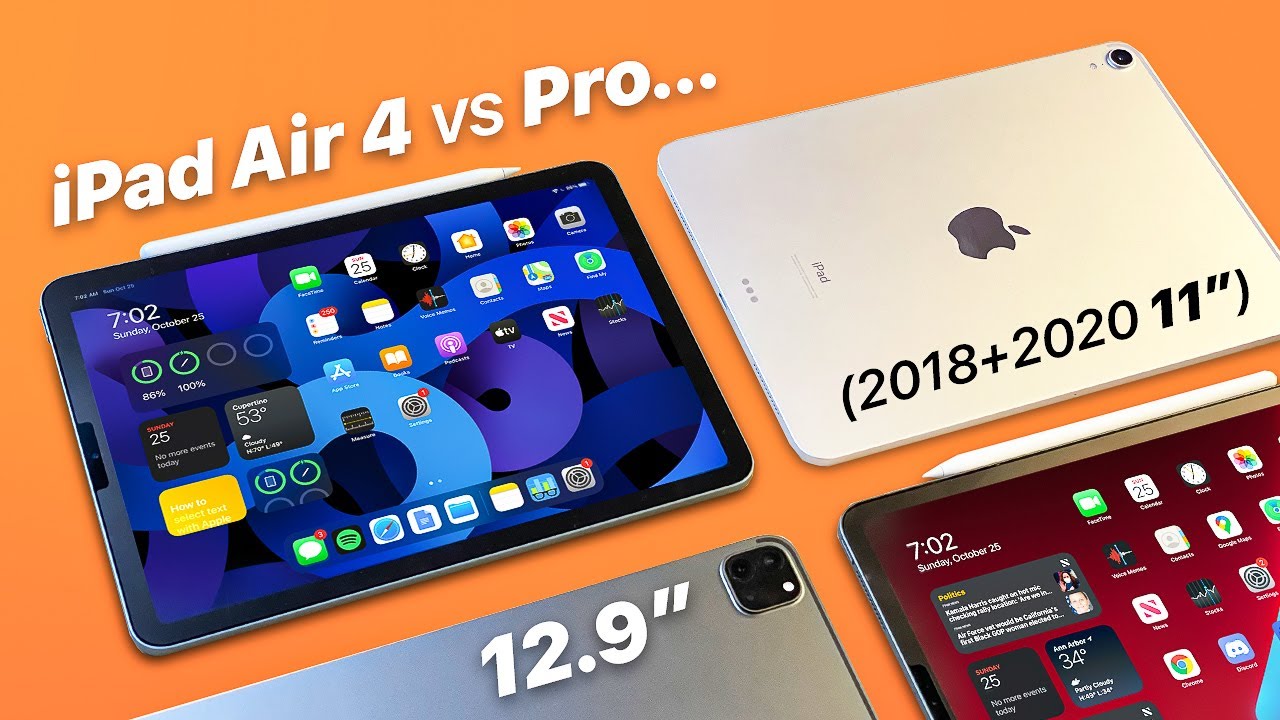
Okay, here is a comprehensive 2000-word article comparing the iPad Air 4 with the iPad Pro (specifically focusing on the 2020 A12Z and 2021 M1 models, as the Air 4 was contemporary with the former and often compared to the latter).
The Battle of the Beasts: iPad Air 4 vs. iPad Pro – A Comprehensive Comparison
Apple’s iPad lineup has become increasingly diverse, offering a tablet for nearly every need and budget. For years, the iPad Pro stood as the undisputed champion, a powerful workhorse designed for professionals and creatives. However, with the introduction of the iPad Air 4 in late 2020, the lines began to blur. Sporting a striking new design, USB-C, and a powerful A14 Bionic chip, the Air 4 instantly earned the moniker "iPad Pro Lite."
This close resemblance has created a significant dilemma for potential buyers: Is the iPad Pro still worth its premium price tag, or does the iPad Air 4 offer enough "pro" features to satisfy most users? This extensive comparison aims to dissect every aspect of these two formidable devices, helping you make an informed decision about which iPad truly suits your needs.
To ensure a thorough comparison, we will primarily pit the iPad Air 4 against the iPad Pro (2020, with the A12Z Bionic chip), as they were released in close proximity and shared many design cues. However, given the significant leap in performance and display technology, we will also frequently reference the iPad Pro (2021, with the M1 chip), particularly its 12.9-inch model, as it represents the current pinnacle of Apple’s tablet offerings.
Let’s dive in.
1. Design and Build Quality: A Shared Aesthetic
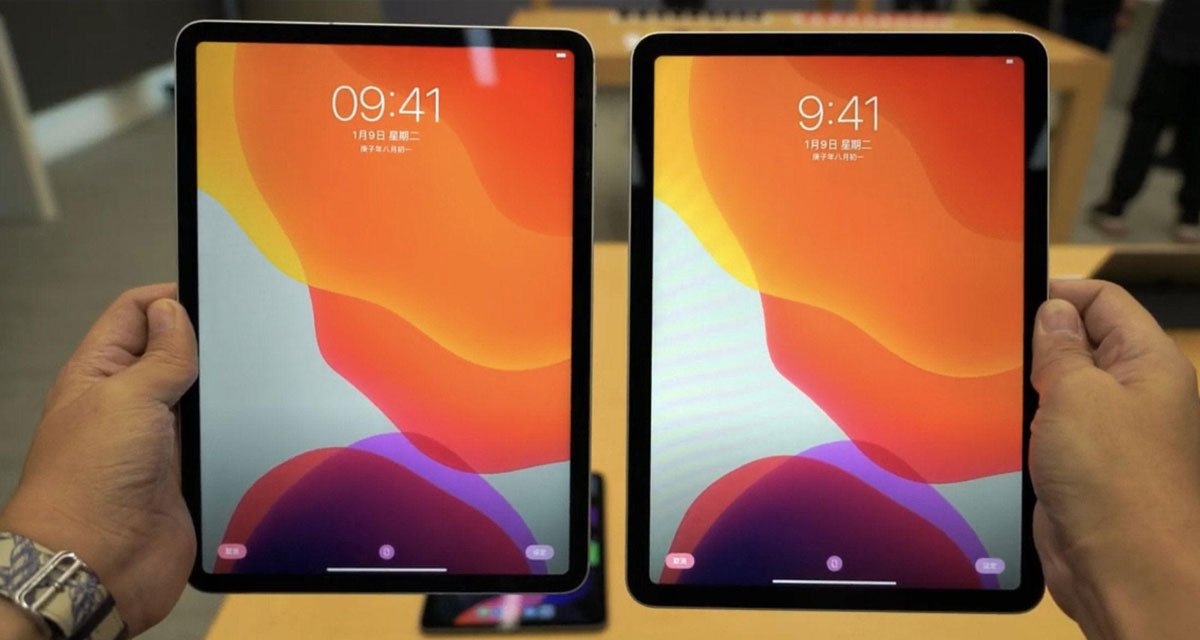
Upon first glance, the iPad Air 4 and the iPad Pro (2020/2021) look remarkably similar. Both feature Apple’s modern, flat-edged design language, moving away from the curved backs and large bezels of older iPads. This aesthetic makes them compatible with the Apple Pencil 2 and the Magic Keyboard, a significant upgrade for the Air line.
- iPad Air 4: Available in 10.9-inch (Liquid Retina) display size. It sports a more vibrant color palette, including Space Gray, Silver, Rose Gold, Green, and Sky Blue. The build quality is excellent, with an aluminum unibody that feels premium and solid.
- iPad Pro (2020/2021): Available in two sizes: 11-inch and 12.9-inch. Color options are limited to Space Gray and Silver, aiming for a more professional, understated look. The aluminum construction is slightly more refined, and the larger 12.9-inch model, in particular, feels more substantial.
Key Difference: The most notable design difference is the camera bump on the iPad Pro, which houses a dual-camera system and a LiDAR scanner, compared to the single camera on the Air 4. While visually minor, this difference signifies a divergence in their intended photographic capabilities. The Air 4’s slightly larger bezels (due to the lack of Face ID and a smaller overall footprint for its display size) are barely noticeable in daily use.
Verdict: Both are beautifully crafted devices. The Air 4 offers more personality with its color options, while the Pro maintains a more traditional "pro" aesthetic. From a pure design perspective, neither is objectively "better" – it comes down to personal preference for size and color.
2. Display: The ProMotion and Mini-LED Advantage
This is where the iPad Pro begins to pull ahead, especially the M1-powered 12.9-inch model.
- iPad Air 4: Features a 10.9-inch Liquid Retina IPS display with a resolution of 2360 x 1640 pixels (264 ppi). It supports True Tone, P3 wide color gamut, and has an anti-reflective coating. Its peak brightness is 500 nits. This is an excellent display for most users, offering sharp text, vibrant colors, and good clarity.
- iPad Pro (2020/2021):
- 11-inch (2020/2021) & 12.9-inch (2020): These models feature a Liquid Retina IPS display with ProMotion technology. ProMotion allows the display refresh rate to dynamically adjust up to 120Hz, resulting in incredibly smooth scrolling, fluid animations, and a more responsive feel when using the Apple Pencil. They also offer 600 nits of peak brightness.
- 12.9-inch (2021 M1): This model takes the display to an entirely new level with Liquid Retina XDR technology, which utilizes mini-LED backlighting. This translates to an astonishing 1,000,000:1 contrast ratio, 1000 nits of full-screen brightness, and 1600 nits peak brightness for HDR content. It also retains ProMotion.
Key Differences:
- ProMotion (120Hz): This is the most significant upgrade on the Pro models over the Air 4. While the Air 4’s 60Hz display is perfectly fine, the 120Hz refresh rate of the Pro makes everything feel noticeably smoother and more fluid, especially when interacting with the screen or drawing with the Apple Pencil. Once you experience ProMotion, it’s hard to go back.
- Brightness: The Pro models are brighter, which is beneficial for outdoor use or in brightly lit environments.
- Liquid Retina XDR (12.9-inch M1 Pro only): This mini-LED display is a game-changer for professional content creators, especially those working with HDR video or photography. The deep blacks, incredible contrast, and extreme brightness provide a viewing experience unparalleled by any other tablet display on the market.
Verdict: For casual use, the Air 4’s display is more than adequate. However, if you value buttery-smooth scrolling, precise Apple Pencil input, or work with HDR content, the iPad Pro’s display technology (especially the 12.9-inch M1 model) is a clear winner and a major reason to justify the higher cost.
3. Performance: A Bionic vs. M Showdown
This is arguably the most critical comparison point, determining the raw power and longevity of each device.
- iPad Air 4: Powered by the A14 Bionic chip. This was the first chip built on a 5-nanometer process, featuring a 6-core CPU and a 4-core GPU. It delivers incredible performance, easily handling demanding apps, graphically intensive games, and 4K video editing. For most users, this chip is overkill for their daily tasks.
- iPad Pro (2020): Equipped with the A12Z Bionic chip. This chip is essentially an A12X (from the 2018 iPad Pro) with an additional GPU core unlocked, making it an 8-core CPU and 8-core GPU powerhouse. While older than the A14, its higher core count (especially on the GPU) meant it could often outperform the A14 in sustained graphics workloads and certain multi-core tasks at the time of the Air 4’s release.
- iPad Pro (2021): Features the groundbreaking M1 chip. This is the same desktop-class chip found in Apple’s MacBooks and iMacs, boasting an 8-core CPU and 8-core GPU, along with a 16-core Neural Engine. It offers a massive leap in performance over both the A14 and A12Z, delivering up to 50% faster CPU performance and 40% faster GPU performance than the A12Z.
Key Differences:
- Raw Power: The M1 chip in the 2021 iPad Pro is in a league of its own. It provides desktop-level performance that can handle incredibly demanding tasks like complex 3D rendering, professional-grade video editing (even 8K footage), and running multiple high-resource applications simultaneously without breaking a sweat.
- Thermal Management & Sustained Performance: The iPad Pro models generally have better thermal management, allowing for longer periods of sustained peak performance compared to the Air 4, which might throttle slightly sooner under extreme load.
- Future-Proofing: While the A14 Bionic is incredibly powerful today, the M1 chip offers significantly more headroom for future demanding applications and iPadOS features, making the M1 iPad Pro a more future-proof investment for power users.
Verdict: For the vast majority of users, the A14 Bionic in the iPad Air 4 is more than enough. It’s lightning fast for browsing, streaming, casual gaming, and even light creative work. However, if you’re a professional who pushes your devices to their limits – think serious video editing, 3D modeling, advanced graphic design, or heavy multitasking – the M1 iPad Pro is the undisputed champion and the only choice for uncompromising performance. The A12Z Pro still holds up remarkably well for most tasks, but the M1 leap is undeniable.
4. Cameras and LiDAR: Beyond Just Photos
While tablets aren’t typically primary photography devices, their cameras are increasingly important for video calls, document scanning, and augmented reality (AR).
- iPad Air 4: Features a single 12MP Wide camera on the back (f/1.8 aperture). It’s capable of recording 4K video at up to 60fps. The front camera is a 7MP FaceTime HD camera (f/2.2 aperture).
- iPad Pro (2020/2021):
- Rear Cameras: Both Pro generations feature a dual-camera system: a 12MP Wide (f/1.8) and a 10MP Ultra Wide (f/2.4) camera. They can record 4K video up to 60fps. Critically, they also include a LiDAR Scanner.
- Front Camera: A 12MP TrueDepth camera with Face ID (f/2.4 aperture). The M1 iPad Pro’s front camera adds Center Stage, an intelligent feature that automatically pans and zooms to keep you centered in the frame during video calls.
Key Differences:
- Ultra Wide Lens: The Pro’s additional Ultra Wide lens offers more versatility for photography, allowing you to capture a wider field of view.
- LiDAR Scanner: This is a significant differentiator for the Pro. LiDAR (Light Detection and Ranging) measures distance by calculating how long it takes for light to reflect back from objects. This enhances AR experiences, improves low-light autofocus for photos and videos, and enables advanced 3D scanning capabilities for professionals in fields like architecture, interior design, or game development.
- TrueDepth Camera & Face ID: The Pro’s TrueDepth camera enables Face ID for secure authentication, and the M1 Pro adds Center Stage, which is excellent for video conferencing.
- Center Stage (M1 iPad Pro only): This feature automatically keeps you in the frame during video calls, even if you move around. It’s incredibly convenient for virtual meetings and family chats.
Verdict: For casual photos, document scanning, and standard video calls, the iPad Air 4’s cameras are perfectly adequate. However, if you rely on your iPad for enhanced AR experiences, professional 3D scanning, or simply want the best possible video calling experience (especially with Center Stage), the iPad Pro is the clear winner.
5. Security: Touch ID vs. Face ID
Both devices offer reliable biometric authentication, but they implement it differently.
- iPad Air 4: Features Touch ID integrated into the top button. This is a clever solution that allows for an all-screen design without requiring Face ID sensors or a home button. It’s fast, reliable, and convenient, especially when wearing a mask.
- iPad Pro (2020/2021): Employs Face ID for authentication. This uses the TrueDepth camera system to scan your face. It’s generally seamless and works in both portrait and landscape orientations.
Key Difference: This comes down to personal preference. Touch ID on the top button is highly versatile and works well in many scenarios. Face ID is often more seamless if you’re not wearing a mask, as you simply look at the device. When the Air 4 launched, its Touch ID was often seen as an advantage during the pandemic when masks were prevalent.
Verdict: Neither is inherently superior; it’s a matter of user preference and specific use cases. Both are secure and fast.
6. Connectivity: USB-C vs. Thunderbolt
The USB-C port was a welcome addition to the Air 4, bringing it in line with the Pro. However, the Pro takes it a step further.
- iPad Air 4: Features a USB-C port. This allows for connections to external displays, external storage, cameras, and various other accessories. It supports USB 3.1 Gen 2 speeds (up to 10Gbps).
- iPad Pro (2020): Also features a USB-C port, supporting similar speeds and functionalities as the Air 4.
- iPad Pro (2021 M1): Features a Thunderbolt / USB 4 port. This is a significant upgrade, offering up to 40Gbps bandwidth. This enables connections to high-performance external displays (like Apple’s Pro Display XDR at full resolution), faster external SSDs, and more complex docking stations with greater throughput.
Key Differences:
- Thunderbolt (M1 iPad Pro only): The M1 iPad Pro’s Thunderbolt port is a game-changer for professionals. It allows for much faster data transfer speeds, which is crucial for large video files, high-resolution photos, or working with external GPUs (though iPadOS doesn’t support eGPUs yet). It also enables more robust peripheral connectivity.
- Cellular Options: Both offer Wi-Fi 6. The iPad Air 4 offers Gigabit LTE as its cellular option. The M1 iPad Pro offers 5G cellular connectivity, which is faster and more future-proof for mobile internet.
Verdict: For most users, the USB-C port on the Air 4 is perfectly sufficient for connecting accessories and external drives. However, if you regularly transfer massive files, need to drive high-resolution external displays, or want the fastest possible mobile internet, the M1 iPad Pro’s Thunderbolt/USB 4 and 5G capabilities are a clear advantage.
7. Audio: Immersive Sound
- iPad Air 4: Features two speaker grilles on the top and bottom (in landscape orientation), delivering stereo audio. The sound quality is good for a tablet, offering decent clarity and volume for casual listening and video calls.
- iPad Pro (2020/2021): Features four speaker grilles (two on top, two on bottom), providing a richer, more immersive quad-speaker audio experience. The soundstage is wider, and the audio is fuller with more bass response, making it excellent for media consumption and gaming.
Key Difference: The Pro’s quad-speaker setup provides a significantly better audio experience, especially for watching movies or playing games without headphones.
Verdict: If audio quality is a high priority and you often use your iPad without headphones, the iPad Pro offers a superior experience. For casual listening, the Air 4 is fine.
8. Battery Life: Parity Across the Board
Apple consistently rates all these models for "up to 10 hours of surfing the web on Wi-Fi or watching video," and "up to 9 hours of surfing the web using cellular data." In real-world usage, this generally holds true.
Verdict: There’s no significant difference in battery longevity between the iPad Air 4 and the iPad Pro models. Your usage patterns will be the biggest determinant of actual battery life.
9. Accessories: Universal Compatibility (Mostly)
A major win for the iPad Air 4 is its compatibility with Apple’s premium accessories.
- Apple Pencil 2: Both the iPad Air 4 and iPad Pro support the Apple Pencil 2, which magnetically attaches to the side for charging and pairing. This is a significant upgrade over the first-generation Pencil, offering improved ergonomics and convenience.
- Magic Keyboard: Both devices are compatible with the Magic Keyboard, Apple’s premium keyboard accessory that offers a floating cantilever design, backlit keys, and an integrated trackpad. This transforms the iPad into a highly capable laptop-like device.
- Smart Keyboard Folio: Both also support the less expensive Smart Keyboard Folio, which offers a keyboard but no trackpad or backlit keys.
Verdict: In terms of accessory compatibility, there’s no real difference. Both offer the full premium iPad accessory experience.
10. Storage Options: Pro Offers More Headroom
- iPad Air 4: Available in 64GB and 256GB configurations.
- iPad Pro (2020/2021): Offers a much wider range of storage options: 128GB, 256GB, 512GB, 1TB, and 2TB.
Key Difference: The Pro’s higher storage tiers are crucial for professionals working with large files (4K video, RAW photos, massive project files), extensive app libraries, or those who want to download a large number of movies and games. For most users, 256GB on the Air 4 is plenty, but 64GB can fill up quickly.
Verdict: If you need significant local storage, especially for professional workflows, the iPad Pro’s extensive options are a clear advantage.
11. Price: The Deciding Factor
This is where the rubber meets the road. The price difference can be substantial.
- iPad Air 4: Starts significantly lower, making it a much more accessible entry point for many users.
- iPad Pro (2020/2021): Prices escalate quickly, especially for the M1 Pro and as you add storage or cellular connectivity. The 12.9-inch M1 Pro with higher storage tiers can even rival MacBook prices.
Verdict: If budget is a primary concern, the iPad Air 4 offers incredible value for its feature set. The iPad Pro demands a premium, and you need to ensure you’ll genuinely utilize its advanced capabilities to justify the cost.
12. iPadOS: The Software Experience
Both the iPad Air 4 and iPad Pro run on the same iPadOS. This means they share core features like Split View multitasking, Slide Over, the Files app, Scribble with Apple Pencil, and access to the vast App Store.
However, the hardware differences can influence the experience of using these features:
- ProMotion: Makes all iPadOS interactions feel smoother on the Pro.
- M1 Chip: Enables some advanced features on the 2021 iPad Pro (e.g., higher external display resolution support, more RAM for certain apps). More recently, the M1 chip (and newer) is required for the full Stage Manager experience with external display support.
- LiDAR: Powers specific AR experiences within iPadOS.
- Center Stage: Enhances video calls within iPadOS apps.
Verdict: While the core software experience is identical, the iPad Pro’s superior hardware often allows iPadOS features to shine brighter or unlock more advanced capabilities.
Who Should Buy Which iPad?
Choose the iPad Air 4 if:
- You’re on a budget: It offers incredible value for its price.
- You want the modern design: You love the flat edges and all-screen look but don’t need the Pro’s extras.
- You do casual creative work: Light photo editing, sketching, note-taking, and graphic design are well within its capabilities.
- You prioritize portability and color options: Its single, slightly smaller size and vibrant colors might appeal more.
- You primarily use your iPad for consumption: Browsing, streaming, reading, and light gaming.
- You don’t need excessive storage: 64GB or 256GB is enough for your needs.
- You prefer Touch ID on the top button.
The iPad Air 4 is the "sweet spot" for most users – offering 90% of the iPad Pro experience at a significantly lower cost. It’s perfect for students, casual users, and those who want a premium tablet experience without breaking the bank.
Choose the iPad Pro (2020/2021) if:
- You are a professional creative: Video editors, 3D artists, graphic designers, architects, photographers who need the absolute best performance.
- You demand the best display: ProMotion is a game-changer for fluidity, and the 12.9-inch M1 Pro’s Liquid Retina XDR is unmatched for HDR content.
- You need desktop-class performance: The M1 chip is designed for the most demanding tasks and offers significant future-proofing.
- You require high storage capacities: Up to 2TB options for massive files and projects.
- You frequently use AR apps or need 3D scanning: The LiDAR scanner is invaluable here.
- You value superior audio quality: The quad-speaker system is excellent for media.
- You need advanced connectivity: Thunderbolt/USB 4 (on M1 Pro) for high-speed peripherals and 5G cellular.
- You frequently engage in video calls and want the best experience: Center Stage on the M1 Pro is a significant convenience.
- You prefer Face ID.
- Budget is not your primary concern.
The iPad Pro is for those who truly push their devices to the limit and can justify the premium for the ultimate tablet experience. It’s a tool for professionals looking to enhance their workflow and capability on the go.
Conclusion: The "Pro" Blurs But Still Leads
The iPad Air 4 undeniably narrowed the gap with the iPad Pro. It adopted the modern design, embraced USB-C, and gained compatibility with premium accessories, making it a truly compelling option for a vast majority of users. For many, the Air 4 provides an exceptional experience that feels very "pro" without the "pro" price tag.
However, the iPad Pro, especially the 2021 M1 model, still holds distinct advantages that justify its higher cost for specific users. The M1 chip offers unparalleled performance, the ProMotion display (and Liquid Retina XDR on the 12.9-inch), the versatile camera system with LiDAR, Thunderbolt connectivity, and enhanced audio make it the superior device for the most demanding tasks and professional workflows.
Ultimately, the choice comes down to your individual needs and budget. If you’re a student, a casual user, or someone who does light creative work, the iPad Air 4 offers phenomenal value and will likely exceed your expectations. But if you’re a professional who needs every ounce of power, the best display technology, and the most advanced connectivity Apple has to offer, the iPad Pro remains the king of the hill, a truly uncompromising tablet that can replace a laptop for many.
Choose wisely, and enjoy your iPad!