Google Pixel 9a Camera Test & Night Mode: A Deep Dive into Computational Photography Excellence
Introduction: The Pixel "a" Series and the Promise of Flagship Photography
Google’s "a" series smartphones have consistently carved out a unique niche in the competitive mid-range market. Unlike many competitors that focus on raw specifications or flashy designs, the Pixel "a" line has always prioritized delivering a quintessential Google experience, with a particular emphasis on its camera. The Pixel 9a, as the latest iteration in this esteemed lineage, continues this tradition, promising flagship-level computational photography prowess at a more accessible price point.
In an era where smartphone cameras are often the primary tool for capturing life’s moments, the Pixel 9a steps onto the stage with a formidable reputation preceding it. Powered by Google’s Tensor G2 chip, the same silicon found in its more expensive Pixel 7 and 7 Pro flagships, the 9a aims to democratize advanced imaging capabilities. This article will embark on a comprehensive journey through the Pixel 9a’s camera system, dissecting its hardware, exploring its computational wizardry, and meticulously testing its performance across various lighting conditions, with a particular focus on its acclaimed Night Mode and the revolutionary Astrophotography feature.
Our goal is to ascertain whether the Pixel 9a truly delivers on its promise of an unparalleled photographic experience for its segment, and how it stacks up against both its mid-range peers and, surprisingly often, its more premium siblings.
The Hardware Behind the Magic: Sensors and Specifications
Before delving into the software, it’s essential to understand the physical components that form the foundation of the Pixel 9a’s imaging capabilities. While not featuring the absolute largest sensors or highest megapixel counts found in some top-tier flagships, Google’s strategy has always been to optimize existing hardware through superior software and processing.
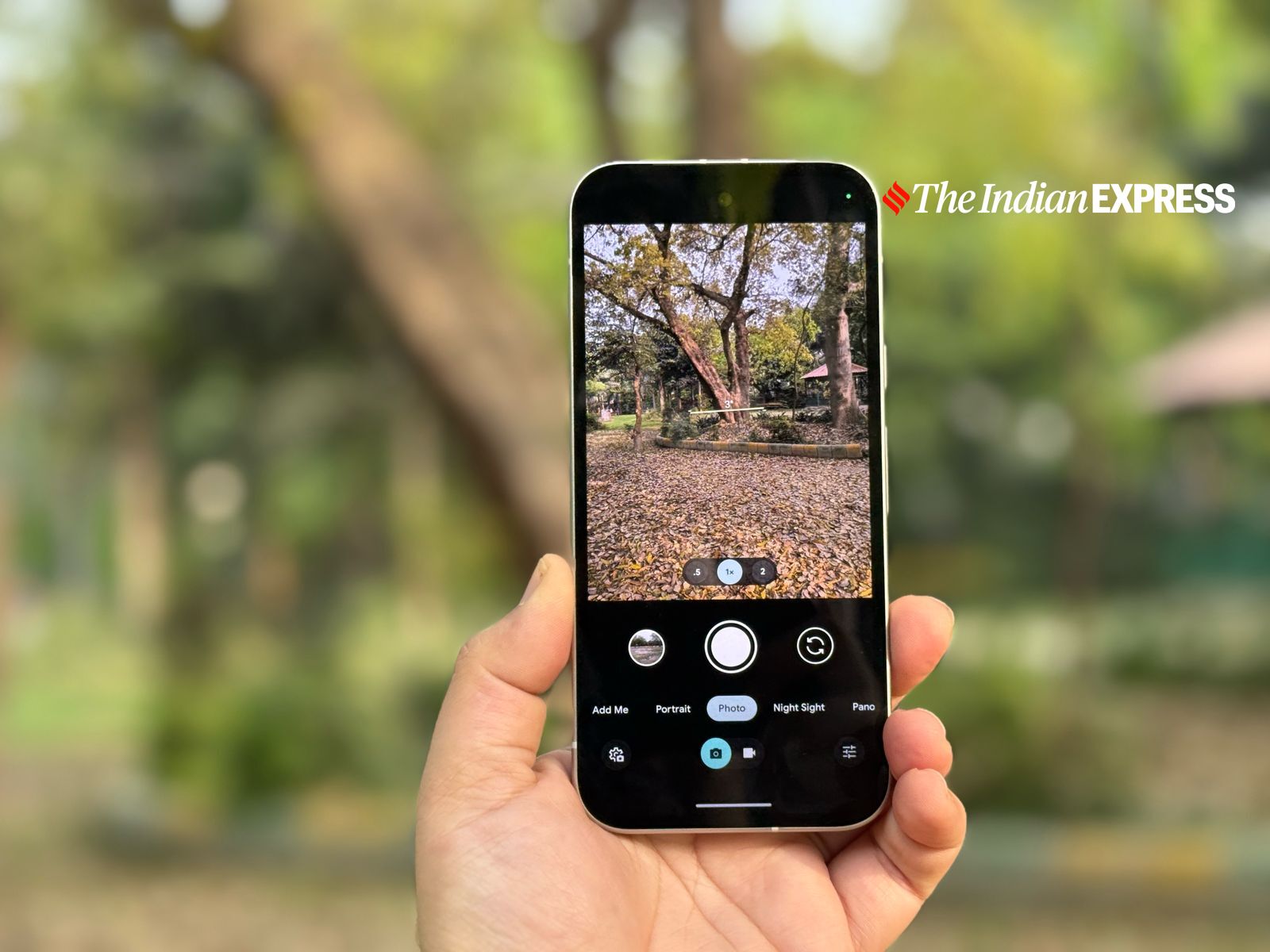
The Pixel 9a features a dual-camera setup on the rear:
- Main Camera: A 64-megapixel Quad Bayer sensor with an f/1.89 aperture and optical image stabilization (OIS). This sensor, while not the absolute newest, is highly capable. By default, it uses pixel binning to output detailed 16-megapixel images, combining data from four pixels into one to improve light sensitivity and reduce noise.
- Ultrawide Camera: A 13-megapixel sensor with an f/2.2 aperture and a 120-degree field of view. This lens allows for expansive landscape shots, group photos, and creative perspectives.
- Front Camera: A 13-megapixel sensor with an f/2.2 aperture, capable of capturing wide-angle selfies.
Both the main and ultrawide cameras benefit from electronic image stabilization (EIS) in addition to the main sensor’s OIS, ensuring smoother video capture and sharper handheld photos in challenging conditions. The Tensor G2 chip, with its dedicated Image Signal Processor (ISP) and advanced AI capabilities, is the true powerhouse, orchestrating the complex computational processes that transform raw sensor data into stunning final images. This integration of hardware and software is where the Pixel 9a truly differentiates itself.
Google’s Computational Photography Philosophy: More Than Just Megapixels
The hallmark of Google Pixel cameras lies not in the size of their sensors or the number of lenses, but in their sophisticated computational photography algorithms. Google pioneered many techniques that are now commonplace, such as HDR+ and Night Sight, and continues to refine them with each generation.
At its core, Google’s approach involves capturing multiple frames very rapidly, analyzing them using machine learning, and then intelligently combining them into a single, optimized image. This process addresses common photographic challenges like dynamic range, noise, and motion blur.
- HDR+ (High Dynamic Range Plus): This isn’t just a simple HDR mode; it’s always active. When you press the shutter, the Pixel captures a burst of underexposed and overexposed frames. The Tensor G2 then meticulously aligns these frames, selects the sharpest parts, and intelligently blends them to create an image with incredibly balanced exposure, rich detail in both shadows and highlights, and natural-looking colors. This results in photos that are vibrant without being oversaturated, and realistic without being flat.
- Real Tone: Google has invested heavily in ensuring accurate and beautiful representation of diverse skin tones. Real Tone algorithms are trained on a vast dataset of images, ensuring that different complexions are rendered faithfully, avoiding the common pitfalls of over-brightening or incorrect white balance that can plague other cameras.
- Photo Unblur and Magic Eraser: While not directly tied to image capture, these post-processing features, powered by the Tensor G2, further enhance the usability of the camera. Photo Unblur can rescue slightly blurry shots, while Magic Eraser allows users to seamlessly remove unwanted objects or people from their photos, showcasing the practical application of Google’s AI.
This computational prowess means that the Pixel 9a delivers a consistent "point-and-shoot" experience. Users don’t need to fiddle with complex manual settings; the camera intelligently handles the heavy lifting, allowing them to focus on composition and timing.
Day Mode Performance: A Benchmark of Consistency
In well-lit conditions, the Pixel 9a’s main camera is nothing short of exceptional for its price point. Images are consistently sharp, exhibiting excellent detail rendition, especially in textures like foliage, fabrics, and architectural elements. The 16-megapixel output provides ample resolution for sharing and even moderate cropping.
- Dynamic Range: Thanks to HDR+, the 9a excels at handling high-contrast scenes. Bright skies retain cloud detail without blowing out, while shadowy foregrounds reveal intricate textures rather than being crushed to black. This is a significant advantage over many mid-range phones that struggle to balance extreme lights and darks.
- Color Accuracy: Google’s color science leans towards natural and realistic tones. Greens are verdant, blues are true, and reds are vibrant without being overly saturated. This results in photos that accurately reflect the scene as perceived by the human eye, avoiding the artificial "pop" that some manufacturers prefer.
- White Balance: The automatic white balance is remarkably accurate, even in mixed lighting conditions. Whether shooting under incandescent bulbs, fluorescent lights, or natural daylight, the 9a consistently produces images with correct color temperature, avoiding unwanted color casts.
- Autofocus: The autofocus system is fast and reliable, quickly locking onto subjects even in moderately challenging scenarios. This contributes to the overall responsiveness of the camera, ensuring fewer missed shots.
The ultrawide camera, while good, doesn’t quite match the main sensor’s detail and low-light performance, which is a common trade-off. However, it offers a useful wider perspective with decent dynamic range and color consistency with the main lens, making it a valuable tool for capturing expansive scenes. Digital zoom is present, up to 7x, but like all digital zooms, quality degrades noticeably beyond 2x, which still leverages the main sensor’s resolution for a relatively clean crop.
Portrait Mode: Artful Blurs and Accurate Edges
Google’s Portrait Mode has long been a standout feature, and on the Pixel 9a, it continues to impress. Utilizing the Tensor G2, the camera intelligently identifies subjects (people, pets, and even objects) and creates a pleasing background blur (bokeh) that mimics the look of a professional DSLR with a wide-aperture lens.
- Edge Detection: The accuracy of edge detection is paramount for a convincing portrait mode, and the 9a largely excels here. Hair strands, glasses, and complex outlines are usually separated cleanly from the background, with minimal artifacting or "halo" effects. While not always perfect, especially with highly intricate backgrounds, it’s consistently among the best in its class.
- Bokeh Quality: The simulated bokeh is natural and pleasing, with a gradual fall-off rather than an abrupt cutoff. Users can also adjust the blur intensity and refocus after the shot has been taken, offering creative flexibility.
- Front Camera Portraits: The 13MP front camera also offers a capable Portrait Mode, delivering excellent selfies with a similar quality of background blur and edge detection, making it ideal for social media.
Night Mode: Conquering the Dark with Night Sight and Astrophotography
This is where the Pixel 9a truly shines and often punches above its weight. Google’s Night Sight has revolutionized low-light photography, making it possible to capture bright, detailed, and surprisingly colorful images in conditions that would render other smartphone cameras useless.
How Night Sight Works: The Science of Seeing in the Dark
Night Sight is a sophisticated computational technique that goes far beyond simply boosting ISO or extending exposure time. When Night Sight is activated (either automatically in very low light or manually selected), the Pixel 9a performs the following intricate steps:
- Multi-Frame Capture: The phone rapidly captures a burst of many (typically 15 or more) short-exposure frames. These individual frames are often very dark and noisy on their own.
- Motion Detection and Alignment: The Tensor G2 uses machine learning to detect any motion within the scene (e.g., a person moving, tree branches swaying) and aligns the static elements across all captured frames. This is crucial for preventing ghosting and ensuring sharpness.
- Noise Reduction and Data Fusion: By combining information from multiple frames, the camera can average out random noise, effectively reducing it significantly. It also extracts more light and color data than would be possible from a single long exposure.
- Tone Mapping and Color Reconstruction: Advanced algorithms intelligently reconstruct colors that might be lost in darkness and perform local tone mapping to ensure that highlights aren’t blown out and shadows retain detail, mimicking the human eye’s ability to adapt to varying light levels.
- Sharpening and Enhancement: Finally, the processed image is sharpened and enhanced to bring out fine details that would otherwise be obscured by darkness or noise.
The result is an image that is dramatically brighter, clearer, and more colorful than what the sensor could capture in a single shot. The process takes a few seconds (typically 2-6 seconds depending on light levels), requiring the user to hold the phone relatively steady.
Night Mode Performance on the Pixel 9a: A Revelation
The Pixel 9a’s Night Sight lives up to the hype. In moderately low light (e.g., dimly lit rooms, street scenes at dusk), it produces images that are remarkably well-exposed, with excellent detail retention and minimal noise. Colors remain accurate, and the camera does an impressive job of preserving the ambient mood of the scene rather than simply making everything look artificially bright. Highlights from streetlights or neon signs are well-controlled, avoiding blown-out areas, while shadows reveal surprising amounts of information.
Even in very challenging conditions, such as near-total darkness, the 9a can pull out an image that is usable, though detail naturally diminishes and noise becomes more apparent. Compared to non-Night Sight photos, the difference is night and day (pun intended). Without Night Sight, such scenes would be underexposed, blurry, and filled with noise. With it, you get a surprisingly clear and vibrant image.
- Ultrawide Night Sight: The ultrawide camera also benefits from Night Sight, allowing for dramatic low-light landscape or architectural shots. While its performance isn’t as strong as the main sensor’s in extreme darkness due to its smaller aperture and sensor, it’s still a valuable addition, providing a unique perspective that many mid-range phones lack in low light.
- Limitations: While incredible, Night Sight isn’t magic. It requires relatively static subjects. Fast-moving objects will likely appear blurry. Also, extreme absolute darkness will still test its limits, though it consistently outperforms competitors.
Astrophotography: Reaching for the Stars
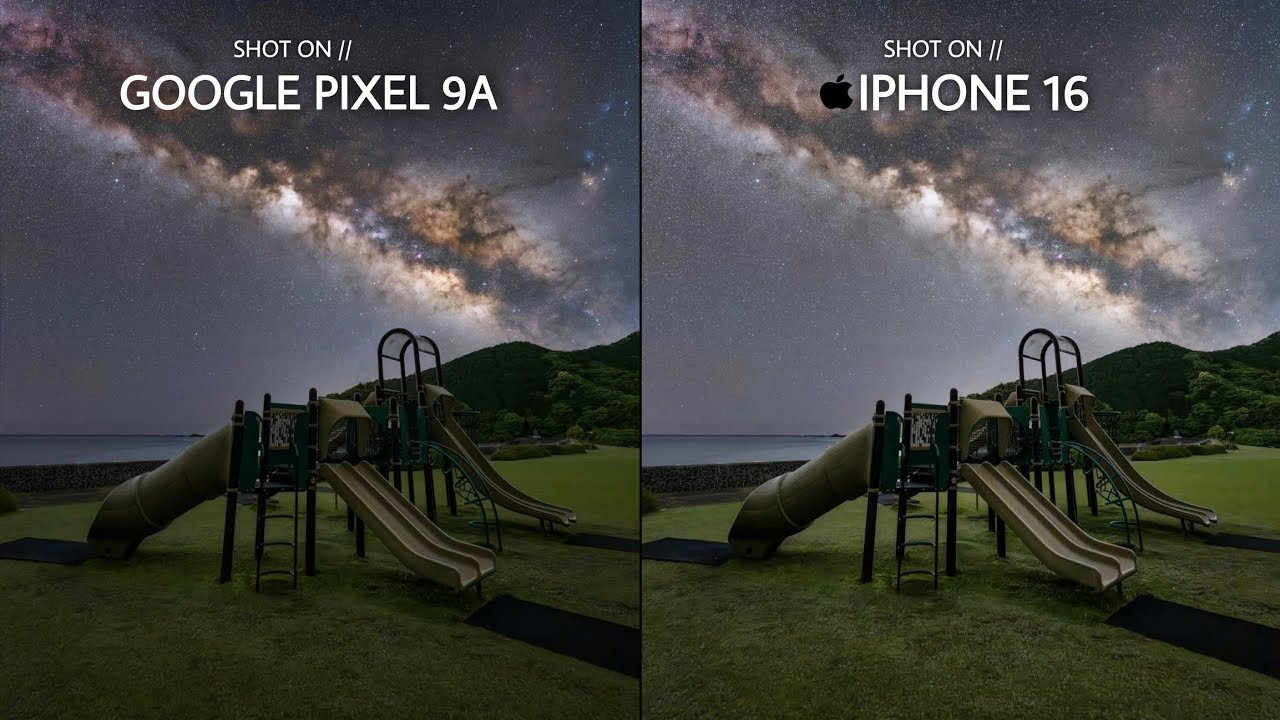
One of the most awe-inspiring features of Pixel’s Night Sight is its dedicated Astrophotography mode. When the phone detects extremely dark conditions and is held perfectly still (preferably on a tripod or propped against a stable surface), Night Sight automatically transitions into Astro mode.
- How it works: Astro mode extends the multi-frame capture process significantly, often taking exposures ranging from 1 to 4 minutes. During this time, it captures hundreds of frames, meticulously aligning them to account for the Earth’s rotation and then stacking them to reveal faint light from stars, constellations, and even parts of the Milky Way that are invisible to the naked eye.
- Performance: The Pixel 9a, inheriting this capability from its flagship siblings, can produce truly breathtaking images of the night sky. Stars appear as pinpoints of light, and the Milky Way’s band can be clearly visible, provided you’re in an area with minimal light pollution. The results are nothing short of astounding for a smartphone, often rivaling images taken with more specialized equipment. It’s a feature that genuinely elevates the Pixel 9a beyond its price bracket.
Video Recording: Good, But Not Class-Leading
While the Pixel 9a excels in still photography, video recording is generally where Pixel phones, especially the "a" series, tend to lag slightly behind the absolute best from competitors like Apple and Samsung.
The Pixel 9a can record video up to 4K resolution at 60 frames per second on both its main and front cameras.
- Stabilization: The combination of OIS and EIS provides very effective stabilization, resulting in smooth, steady footage even when walking. This is a significant strength.
- Dynamic Range and Color: In good lighting, videos exhibit good dynamic range and natural colors, consistent with the still photos.
- Audio Quality: Audio capture is generally clear and well-balanced.
- Low-Light Video: This is where the Pixel 9a shows its limitations. While usable, low-light video often exhibits more noise and less detail compared to its still photos, and it doesn’t have a dedicated "Night Mode for video" like some rivals. Rolling shutter can also be noticeable in some fast-panning shots.
For casual videography, the Pixel 9a is more than capable. However, for serious videographers, it might not be the top choice in its segment.
Extra Camera Features and Ecosystem Integration
Beyond the core functionalities, the Pixel 9a offers a suite of intelligent features that enhance the overall camera experience:
- Long Exposure: Creates artistic motion blur effects for moving subjects like waterfalls or car lights, directly in the camera app.
- Guided Frame: An accessibility feature that uses audio cues to help visually impaired users frame their shots.
- Panorama: For stitching together wide vistas.
- Lens: Google Lens integration allows for instant object recognition, text translation, and more directly from the viewfinder.
- Google Photos Integration: Seamless backup to Google Photos, along with powerful editing tools and intelligent organization, further enhances the post-capture experience.
The Pixel 9a Camera vs. The Competition
In the crowded mid-range segment, the Pixel 9a’s camera faces stiff competition from devices like the Samsung Galaxy A series, Nothing Phone, and various offerings from OnePlus and Xiaomi.
- Still Photography (Daylight): The Pixel 9a consistently holds its own, often surpassing rivals in dynamic range, color accuracy, and skin tone rendition. Its "point-and-shoot" reliability is unmatched.
- Still Photography (Night Mode): This is the Pixel 9a’s undisputed trump card. Night Sight and especially Astrophotography put it in a league of its own within the mid-range, often rivaling or even outperforming older flagship phones.
- Video Recording: While good, it’s generally outclassed by Samsung’s A-series in terms of overall versatility and low-light video performance.
- Zoom: Most mid-range phones lack dedicated telephoto lenses, so the Pixel 9a’s digital zoom performance is on par, but it won’t compete with flagships offering optical zoom.
Overall, if still photography, particularly in challenging low-light conditions, is your top priority for a mid-range phone, the Pixel 9a is arguably the best choice available.
Conclusion: A Computational Photography Marvel for the Masses
The Google Pixel 9a’s camera system is a testament to Google’s unwavering belief in computational photography. It demonstrates that cutting-edge imaging capabilities don’t necessarily require the most expensive or numerous hardware components; rather, it’s the intelligent software, powered by a dedicated chip like the Tensor G2, that truly unlocks a camera’s potential.
From consistently excellent daylight photos with superb dynamic range and natural colors to its class-leading Night Sight and the awe-inspiring Astrophotography mode, the Pixel 9a delivers an unparalleled still photography experience for its price point. It makes capturing professional-looking photos accessible to everyone, regardless of their photographic skill level.
While its video capabilities, particularly in low light, might not lead the pack, and the lack of an optical zoom lens is a minor drawback, these are relatively small compromises given the overall strength of its still image quality.
For anyone seeking a mid-range smartphone that prioritizes a world-class camera, especially for those who frequently shoot in challenging lighting or dream of capturing the night sky, the Google Pixel 9a is not just a strong contender – it’s often the undisputed champion. It’s a camera that empowers users to see and capture the world in ways previously reserved for much more expensive devices, truly democratizing the art of computational photography.