The Enduring Value: Exploring the iPad Air 4 Price in the USA
The iPad Air 4, launched in late 2020, marked a significant design overhaul for Apple’s mid-range tablet line, adopting the sleek, flat-edged aesthetic of the iPad Pro and introducing USB-C connectivity to the Air series. While it has since been succeeded by the M1-powered iPad Air 5 (2022) and the M2-powered iPad Air 6 (2024), the iPad Air 4 remains a highly sought-after device in the secondary market, offering a compelling blend of modern design, capable performance, and a more accessible price point than its newer siblings.
This comprehensive article will delve into the intricacies of the iPad Air 4’s price in the USA, exploring its original launch prices, its current market value in the used and refurbished sectors, the myriad factors influencing its cost, and whether it still represents a wise investment in today’s rapidly evolving tech landscape.
The Original Launch Price: Setting the Baseline
When Apple first unveiled the iPad Air 4 in September 2020, it was positioned as a premium mid-range tablet, bridging the gap between the entry-level iPad and the high-end iPad Pro. Its pricing reflected its advanced features, including the then-new A14 Bionic chip, a Liquid Retina display, Touch ID integrated into the power button, and compatibility with the Apple Pencil 2 and Magic Keyboard.
Here were the original launch prices for the iPad Air 4 in the USA:
- iPad Air 4 (64GB, Wi-Fi): $599
- iPad Air 4 (64GB, Wi-Fi + Cellular): $729
- iPad Air 4 (256GB, Wi-Fi): $749
- iPad Air 4 (256GB, Wi-Fi + Cellular): $879
These prices established the benchmark for the device’s value, and they serve as a critical reference point when evaluating its current depreciation and secondary market worth. It’s important to remember that these were the prices for a brand-new, factory-sealed unit directly from Apple or authorized retailers.
The Impact of Discontinuation: Shifting Market Dynamics
The iPad Air 4 was officially discontinued by Apple in March 2022, upon the release of the iPad Air 5. This discontinuation profoundly impacted its market availability and pricing. New units from official channels quickly vanished, pushing the device almost entirely into the used and refurbished markets.
For consumers, this shift means that purchasing a "new" iPad Air 4 is virtually impossible today, unless you stumble upon very rare, old stock from a third-party seller. The vast majority of available units will be pre-owned, with varying degrees of wear and tear, and often without the original warranty directly from Apple. This necessitates a more cautious and informed approach to purchasing.
Where to Find the iPad Air 4 Today: The Secondary Market Landscape
Given its discontinuation, the iPad Air 4’s presence is now predominantly in the secondary market. This market is diverse, encompassing various types of sellers and conditions, each with its own price implications.
-
Apple Certified Refurbished (ACR): While less common for older, discontinued models, Apple occasionally offers refurbished units of its older devices. ACR products undergo rigorous testing, include genuine Apple parts if replacements are needed, come with a new battery and outer shell, and are backed by a one-year warranty. They are often indistinguishable from new units in terms of appearance and function.
- Price Expectation: Closest to original retail, but still a discount. If available, this is usually the safest and most premium option.
-
Reputable Third-Party Refurbishers: Companies like Amazon Renewed, Best Buy Certified Refurbished, Gazelle, Back Market, and Swappa often have a wide selection of refurbished iPad Air 4 units. These devices are typically tested, cleaned, and repaired by the refurbisher, often come with a limited warranty (e.g., 90 days to one year), and are graded based on their cosmetic condition (e.g., "Excellent," "Good," "Fair").
- Price Expectation: Significantly lower than original retail, varying based on condition and the refurbisher’s warranty/reputation.
-
Used Marketplaces (Peer-to-Peer): Platforms like eBay, Facebook Marketplace, Craigslist, and local classifieds are abundant with used iPad Air 4 units sold directly by individuals. This is often where you’ll find the lowest prices, but also where the risks are highest. Quality control is absent, warranties are non-existent, and the condition can vary wildly.
- Price Expectation: Widest range, from deeply discounted "as-is" sales to competitive prices for well-maintained units. Requires careful vetting of sellers and products.
Factors Influencing the iPad Air 4’s Price in the Used & Refurbished Market
The price of a used or refurbished iPad Air 4 in the USA is not a static figure. Several critical factors contribute to its final cost:
-
Condition of the Device: This is arguably the most significant determinant of price.
- "Like New" / "Excellent": Minimal to no cosmetic flaws, fully functional, often comes with original packaging and accessories. Commands the highest price in the secondary market.
- "Good": Minor scratches or scuffs, fully functional. A common and good value option.
- "Fair" / "Acceptable": Noticeable cosmetic wear (dents, deeper scratches), but still fully functional. The most affordable, but aesthetics might be compromised.
- "For Parts" / "Non-Functional": Severely damaged or non-functional. Very low price, intended for repair or component harvesting.
-
Storage Capacity: The iPad Air 4 was available in 64GB and 256GB configurations.
- 64GB: The base model, generally more affordable. Sufficient for casual use, web browsing, streaming, and light app usage.
- 256GB: The higher capacity model, commanding a premium. Essential for users who download many large apps, store extensive media libraries, or work with large files. The price difference between 64GB and 256GB can be substantial, often $50-$100 or more even in the used market.
-
Connectivity (Wi-Fi vs. Wi-Fi + Cellular):
- Wi-Fi Only: The more common and cheaper option. Relies on Wi-Fi networks for internet access.
- Wi-Fi + Cellular: Includes a cellular modem, allowing internet access via a cellular data plan (e.g., 5G/LTE). This version always fetches a higher price, typically an additional $80-$150, due to the added hardware and functionality.
-
Seller / Retailer:
- Reputable Refurbishers: Tend to have higher prices due to their quality control, testing, cleaning, and often a warranty/return policy. You pay for peace of mind.
- Individual Sellers: Prices can be lower, but the risk is higher. The deal depends heavily on the seller’s honesty, the accuracy of their description, and your ability to verify the device’s condition.
-
Included Accessories: A unit that comes with the original box, charger, USB-C cable, and especially valuable accessories like an Apple Pencil 2 or Magic Keyboard, will command a higher price than a bare-bones device.
-
Battery Health: While not always disclosed by individual sellers, battery health can impact the value. A battery with significantly degraded capacity (e.g., below 80%) might warrant a lower price due to the potential need for a costly replacement.
-
Demand and Market Trends: While the iPad Air 4 is older, it still holds significant appeal. Prices can fluctuate slightly based on overall market demand, seasonal sales (e.g., Black Friday, back-to-school), or the release of newer models (which can drive down prices of older ones).
Estimated Price Ranges for the iPad Air 4 in the USA (Q4 2024 / Early 2025)
Based on current trends in the refurbished and used markets, here are estimated price ranges for the iPad Air 4 in the USA. These are averages and can vary.
-
iPad Air 4 (64GB, Wi-Fi Only):
- "Like New" / Excellent Refurbished: $380 – $450
- "Good" Refurbished / Used: $320 – $380
- "Fair" Used: $250 – $320
-
iPad Air 4 (256GB, Wi-Fi Only):
- "Like New" / Excellent Refurbished: $450 – $520
- "Good" Refurbished / Used: $400 – $450
- "Fair" Used: $330 – $400
-
iPad Air 4 (64GB, Wi-Fi + Cellular):
- "Like New" / Excellent Refurbished: $450 – $520
- "Good" Refurbished / Used: $380 – $450
- "Fair" Used: $300 – $380
-
iPad Air 4 (256GB, Wi-Fi + Cellular):
- "Like New" / Excellent Refurbished: $520 – $600
- "Good" Refurbished / Used: $450 – $520
- "Fair" Used: $380 – $450
Note: These ranges do not account for bundles with accessories like the Apple Pencil or Magic Keyboard, which would add to the total cost.
Is the iPad Air 4 Still a Good Buy in 2024/2025? (Value Proposition)
Despite being a few generations old, the iPad Air 4 continues to be a highly capable and appealing tablet, especially at its current secondary market prices. Its value proposition is strong for specific user profiles:
Pros:
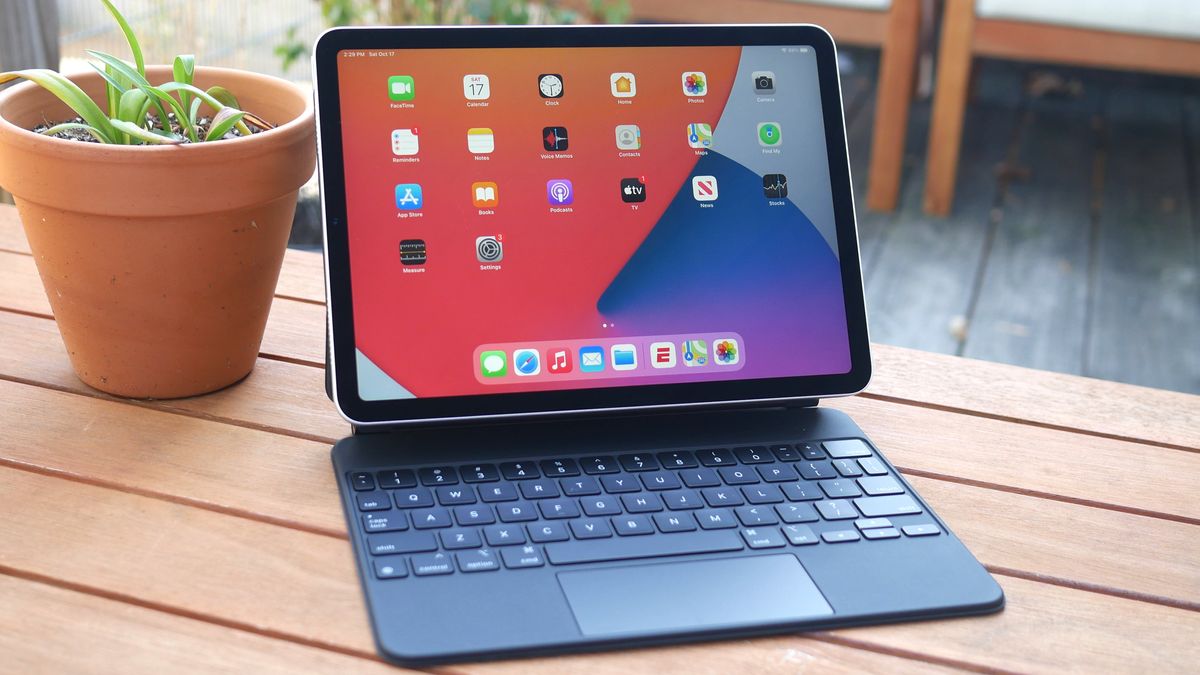
- Modern Design: It boasts the contemporary, flat-edged design language introduced with the iPad Pro, making it feel current and premium. It supports the second-generation Apple Pencil, which magnetically attaches and charges, and the Magic Keyboard, offering a laptop-like experience.
- USB-C Port: A major advantage over older base iPads, USB-C provides faster data transfer, universal charging compatibility, and the ability to connect to a wider range of accessories like external displays and hubs.
- A14 Bionic Chip: While not the latest from Apple, the A14 Bionic is still an incredibly powerful chip. It handles everyday tasks, demanding apps, and most games with ease. For casual browsing, streaming, note-taking, and light productivity, it performs flawlessly.
- Liquid Retina Display: The 10.9-inch display is vibrant, sharp, and offers True Tone technology for comfortable viewing in various lighting conditions.
- Software Support: Apple has an excellent track record for long-term software support. The A14 Bionic chip is still relatively new in Apple’s lineup and is expected to receive iPadOS updates for several more years, ensuring continued access to new features and security patches.
Cons:
- Older Chip: The A14 Bionic is superseded by the M1 in the Air 5 and M2 in the Air 6. While the A14 is powerful, the M-series chips offer significantly more raw power, especially for professional-grade tasks, demanding video editing, or 3D rendering.
- No ProMotion: Unlike the iPad Pro, the Air 4 (and Air 5/6) lacks ProMotion technology, which provides a variable refresh rate up to 120Hz for smoother scrolling and a more responsive feel. This is a minor point for most users but noticeable for some.
- Potentially Shorter Software Lifespan: While it will get updates for a few more years, it will inevitably reach end-of-life for major iPadOS updates sooner than a brand-new iPad.
Who is it for?
The iPad Air 4 is an excellent choice for:
- Students: Ideal for note-taking, research, reading textbooks, and light assignments.
- Casual Users: Perfect for web browsing, social media, streaming video, and casual gaming.
- Media Consumers: The beautiful display and stereo speakers make it great for movies and music.
- Budget-Conscious Users: Those who want a modern iPad experience (USB-C, Apple Pencil 2 support, Pro-like design) without paying the premium for the M-series Airs or Pros.
- Light Productivity Users: Suitable for email, document editing, and basic creative tasks.
Comparing the iPad Air 4’s Price to Alternatives
Understanding the Air 4’s value also involves comparing its secondary market price to other current Apple tablets:
-
iPad Air 5 (M1): Typically starts around $450-$550 for refurbished 64GB Wi-Fi models. For an extra $100-$150 over a "Like New" Air 4, you get the significantly more powerful M1 chip, which is a major upgrade for future-proofing and demanding tasks. If your budget allows, the Air 5 is often the better long-term investment.
-
iPad Air 6 (M2): The latest model, starting at $599 new. This is a much higher price point, but it offers the bleeding-edge M2 chip and slightly improved display features. The Air 4 is roughly half the price of a new Air 6.
-
iPad (10th Generation): Starts new at $349. While similarly priced to a "Good" condition Air 4, the 10th Gen iPad uses an older A14 Bionic chip, has a less premium design, still uses the original Apple Pencil (requiring a dongle for charging), and lacks a fully laminated display. The Air 4 generally offers a superior overall experience for a comparable or slightly higher price in the used market.
-
Older iPad Pro Models: Sometimes, older iPad Pro models (e.g., 2018 or 2020) with A12Z or A12X chips can be found at similar prices to the Air 4. While they offer ProMotion and potentially more speakers, their designs are older, and their chips might not be as future-proof as the A14 or M-series.
The iPad Air 4 thus sits in a unique sweet spot: offering a modern design and capable performance at a price point that undercuts even the current base iPad if you’re willing to buy used, and significantly cheaper than the newer Air models.
Tips for Buying a Used or Refurbished iPad Air 4
To ensure you get the best value and avoid common pitfalls when purchasing a used iPad Air 4 in the USA:
- Buy from Reputable Sellers: Prioritize Apple Certified Refurbished or well-known third-party refurbishers (Amazon Renewed, Best Buy, Back Market, Gazelle, Swappa) over individual sellers on open marketplaces, especially if you’re less tech-savvy.
- Understand the Condition Grading: Familiarize yourself with how sellers grade device condition ("Excellent," "Good," "Fair") and what each grade implies cosmetically.
- Check Warranty and Return Policies: Reputable refurbishers offer warranties (typically 90 days to one year) and clear return policies, which are crucial if you encounter issues. Individual sellers usually offer none.
- Inspect Photos and Descriptions Carefully: Look for high-resolution photos that show all angles of the device. Read the description thoroughly for any mention of defects, battery health, or missing accessories.
- Verify Serial Number (If Possible): If buying from an individual, ask for the serial number and check it on Apple’s coverage checker website (checkcoverage.apple.com) to see if it’s still under any limited warranty (unlikely for Air 4 but possible for newer models) or if it’s been reported lost/stolen.
- Test the Device Upon Arrival: If buying online, thoroughly test all functions immediately upon receipt: display (dead pixels, touch sensitivity), cameras, speakers, microphone, buttons, USB-C port, Wi-Fi, Bluetooth, and cellular (if applicable).
- Battery Health: If buying from an individual, ask for the battery health percentage (found in Settings > Battery > Battery Health). Aim for 85% or higher.
- Beware of Deals Too Good to Be True: If a price seems unusually low compared to the market average, it’s often a red flag.
Longevity and Future-Proofing
The A14 Bionic chip in the iPad Air 4 is still a powerhouse for most tasks. Apple typically provides 5-7 years of major iPadOS updates for its devices. Given that the A14 debuted in late 2020, the iPad Air 4 can reasonably expect to receive major iPadOS updates for at least another 2-3 years (likely until iPadOS 19 or 20), with security updates potentially extending beyond that.
For users primarily focused on productivity, media consumption, and general use, the iPad Air 4 will remain a highly functional and enjoyable device for years to come. Its modern design, USB-C, and Apple Pencil 2 support ensure it doesn’t feel outdated despite its age.
Conclusion
The iPad Air 4, while no longer available new, maintains a strong presence and compelling value proposition in the USA’s secondary market. Its original launch prices set a premium standard, but its discontinuation has made it an incredibly attractive option for budget-conscious consumers seeking a modern, capable iPad experience.
With estimated prices ranging from $250 to $600 depending on condition, storage, and cellular capabilities, the iPad Air 4 offers a significant upgrade over the base iPad and a more affordable entry point into the "Pro-like" tablet world compared to the newer Air and Pro models. For students, casual users, and those prioritizing design and versatility without breaking the bank, a carefully chosen used or refurbished iPad Air 4 represents an intelligent and enduring investment in mobile computing. By understanding the market dynamics and exercising due diligence, buyers can unlock exceptional value from this still-impressive Apple tablet.